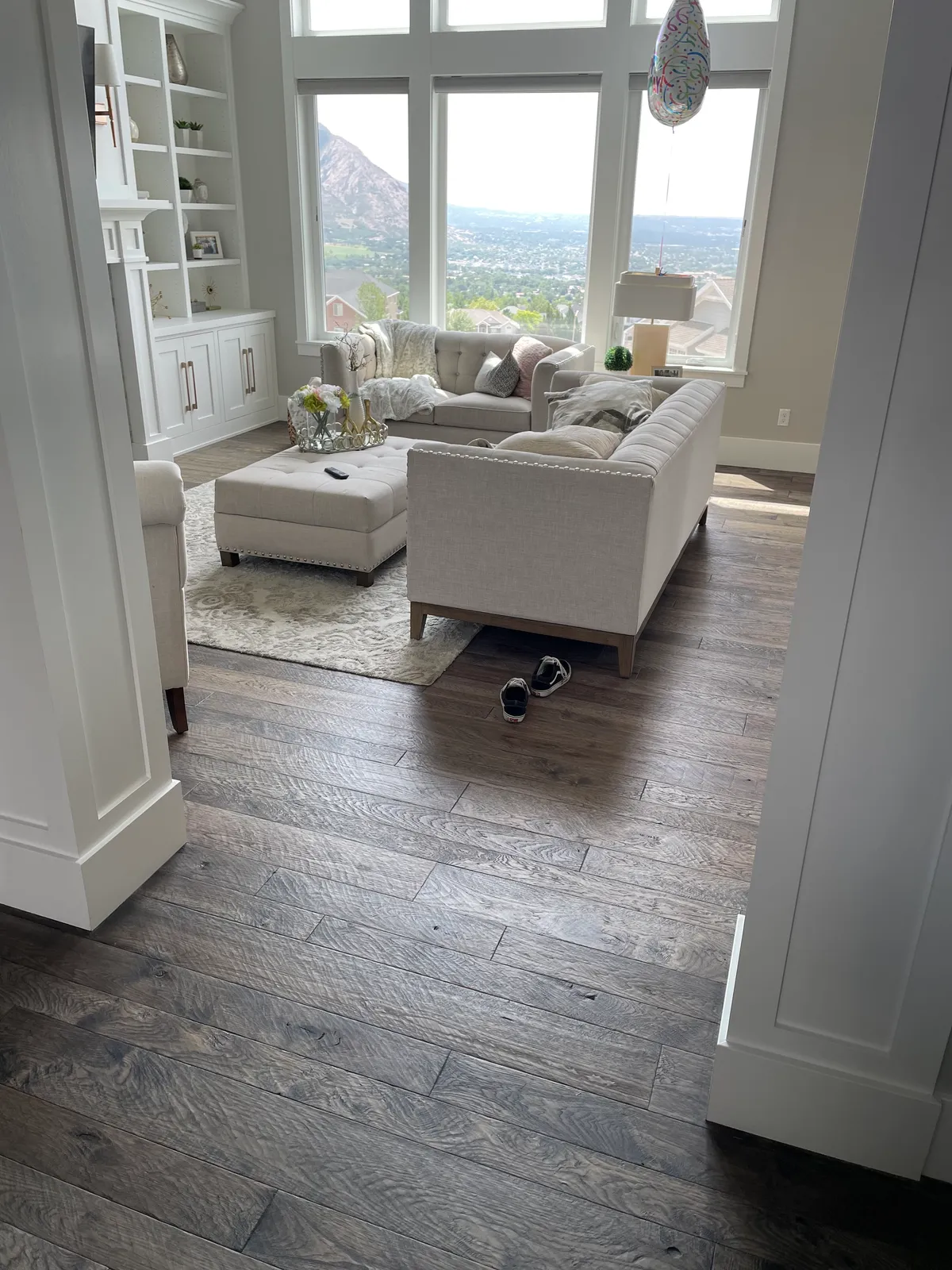
Hardwood can work over radiant heat in Utah, but only when the product, heating system, subfloor, and installation method are all compatible.
The safest answer for most radiant-heat projects is a high-quality engineered hardwood with a stable core, a manufacturer-approved radiant-heat rating, and a species that handles movement well. White oak is usually one of the best options. Wide solid hardwood is usually the riskier path.
That does not mean solid hardwood can never work. It means radiant heat removes the margin for guesswork.
The quick answer
For most Utah homes with radiant heat, start with:
- Engineered white oak: usually the safest hardwood choice.
- Engineered rift or quarter sawn oak: strong stability when available.
- Narrower or moderate-width planks: less movement risk than very wide boards.
- Matte factory finish: more predictable than trying to solve everything on site.
- Manufacturer-approved installation system: not just an installer preference.
Avoid choosing hardwood for radiant heat based only on color or a showroom sample. The product must be approved for the heating system.
Why radiant heat changes the hardwood decision
Wood naturally expands and contracts as moisture changes. Radiant heat adds another variable because the floor is being warmed from underneath.
That heat can dry the wood faster, especially in Utah where indoor winter air is already dry. If the product is not stable enough or the system runs too hot, the floor can gap, cup, check, crack, or fail.
The goal is not just to pick a pretty hardwood. The goal is to pick a floor that can live with the heating system.
Engineered hardwood is usually the better choice
Engineered hardwood has a real hardwood surface over a layered core. That construction is typically more dimensionally stable than solid wood, which makes it a better fit for radiant heat.
The best engineered hardwood for radiant heat usually has:
- a real hardwood wear layer
- a stable plywood or high-quality core
- clear manufacturer approval for radiant heat
- installation instructions for heated floors
- a stated maximum surface temperature
- acclimation and moisture requirements
Not every engineered floor qualifies. Some engineered products are built for price, not performance. The product spec sheet matters.
For a broader construction comparison, read engineered vs. solid hardwood in Utah.
White oak is one of the safest hardwood species
White oak is popular over radiant heat because it is durable, stable for hardwood, and fits the design direction of many Utah homes.
It also gives homeowners a strong range of finish options: natural, light neutral, warm brown, and soft modern tones. That helps because radiant-heat homes are often higher-end builds or remodels where the floor needs to connect with cabinets, stone, windows, and trim.
If you are already leaning white oak, read the full guide to white oak flooring in Utah.
Solid hardwood can be risky over radiant heat
Solid hardwood is not automatically wrong, but it is less forgiving. The board is one piece of wood, so it responds more directly to heat and humidity changes.
Risk goes up when:
- planks are very wide
- indoor humidity is not controlled
- the heating system has hot spots
- the wood is installed before proper acclimation
- the product is not approved for radiant heat
- the slab or subfloor moisture is not verified
If solid hardwood is important to you, the product selection and installation plan need to be reviewed carefully before ordering material.
Watch the maximum surface temperature
Radiant-heat hardwood projects usually depend on the surface temperature staying within the flooring manufacturer’s limit. A common planning target is keeping wood floor surface temperatures below about 80 to 85 degrees, but the actual limit comes from the specific product and heating system.
This is not a detail to leave vague. Ask for the written installation instructions and confirm the heating system can operate within them.
Acclimation matters even more in Utah
Utah’s dry air makes acclimation important on any hardwood job. Over radiant heat, it becomes even more important.
A good process includes:
- bringing the flooring into the home before installation
- allowing the heating system to run and stabilize
- checking indoor humidity
- checking subfloor moisture
- checking flooring moisture
- following the manufacturer’s timing requirements
Skipping acclimation can create problems that look like product failure but are really installation-process failure.
Best installation methods over radiant heat
The right installation method depends on the subfloor, heating system, and product. Common options include:
- Glue-down engineered hardwood: often a strong option over concrete or approved radiant assemblies.
- Floating engineered hardwood: can work when the product and underlayment are approved.
- Nail-down hardwood: only appropriate in specific assemblies and usually more common over wood subfloors, not directly over concrete radiant slabs.
The manufacturer should approve the installation method in writing. If the instructions say one thing and the field plan says another, solve that before the floor goes down.
For budget planning, see hardwood installation cost in Utah.
What to avoid
Avoid these mistakes on radiant-heat hardwood projects:
- buying a hardwood product before confirming radiant-heat approval
- choosing extra-wide solid planks without understanding movement risk
- ignoring the maximum surface temperature
- installing before the heating system has stabilized
- skipping moisture testing
- assuming all engineered hardwood performs the same
- picking color first and technical compatibility second
Radiant heat does not make hardwood impossible. It just makes shortcuts more expensive.
Best stain colors and finishes for radiant-heat homes
The heating system does not determine the stain color, but the type of project often does. Radiant-heat homes are frequently open, bright, and higher-end, so natural and light-to-medium hardwood tones usually fit well.
Good finish directions include:
- natural white oak
- light neutral brown
- warm medium brown
- low-sheen or matte finishes
- soft modern tones that do not fight the wood
Very dark colors can show movement, scratches, and dust more easily. Strong gray tones can date faster and may fight the natural warmth of the wood.
For color guidance, read hardwood stain colors in Utah.
Radiant heat in mountain homes
Radiant heat is common in mountain and luxury homes because it creates comfortable warmth without forced-air noise. These homes often also have big windows, dry winter air, snow exposure at entries, and large open rooms.
That combination makes product stability and finish choice especially important. Engineered white oak, quality underlayment or adhesive systems, and careful humidity management are usually better than chasing the widest solid plank available.
For broader material planning, read best flooring for Utah mountain homes.
The best next step
If your home has radiant heat, do not start with a product photo. Start with the system, subfloor, and room conditions.
During a Free In-Home Floor Fit Consultation, we can look at the space, talk through the heating system, compare approved hardwood options, and help you avoid choosing a beautiful floor that is not built for the job.
Book your Free In-Home Floor Fit Consultation
FAQ
Can hardwood be installed over radiant heat in Utah?
Yes, but the hardwood product must be approved for radiant heat and installed according to the manufacturer’s instructions. Engineered hardwood is usually safer than solid hardwood for these projects.
What is the best hardwood species for radiant heat?
White oak is one of the best common choices because it is durable, stable, and available in strong engineered constructions. The product construction matters as much as the species.
Is engineered hardwood better than solid over radiant heat?
Usually, yes. Engineered hardwood is generally more dimensionally stable, which makes it better suited for heated floors. Solid hardwood may work in some assemblies, but it needs more caution.
What temperature is safe for hardwood over radiant heat?
Use the flooring manufacturer’s limit. Many products require the wood surface temperature to stay under roughly 80 to 85 degrees, but the specific product instructions are the rule.
Can wide-plank hardwood go over radiant heat?
Sometimes, especially in engineered construction, but wider planks increase movement risk. Confirm radiant-heat approval, installation method, humidity expectations, and surface-temperature limits before choosing wide planks.