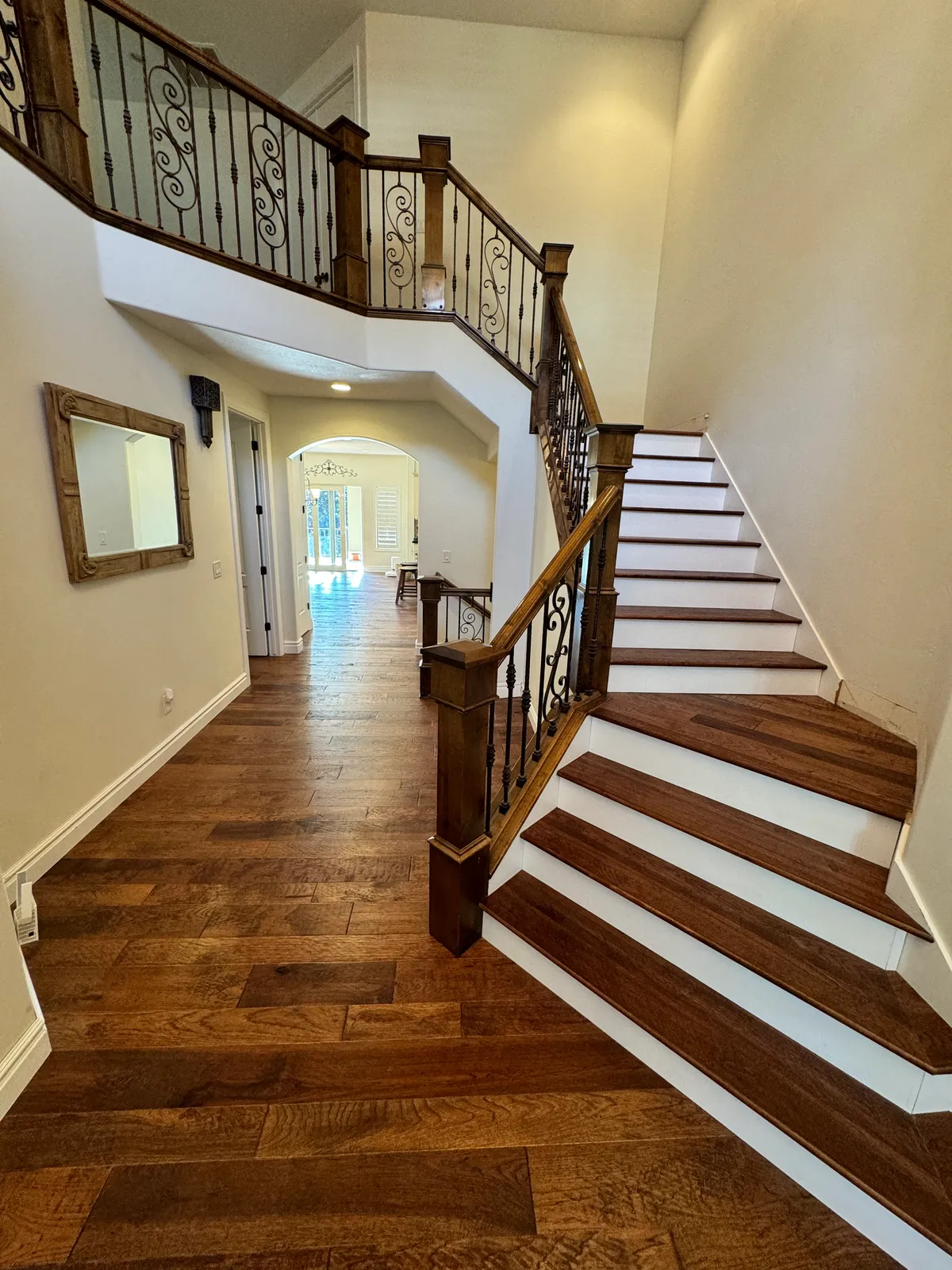
Yes, new flooring can increase home value.
But the better answer is this: the right flooring in the right rooms can increase value, make the house easier to sell, and keep buyers from mentally discounting your home the second they walk in.
That matters because flooring is not a hidden upgrade. Buyers see it immediately. They feel it underfoot. They use it to judge the whole house, fair or not.
If you are trying to decide whether new floors are worth the money before you sell, here is how to think about it.
Quick Answer: Does New Flooring Increase Home Value?
Yes, new flooring can increase home value when it improves the rooms buyers notice first: the entry, kitchen-adjacent spaces, main living area, hallways, and stairs. The biggest return usually comes from replacing worn, stained, dated, or mismatched flooring with something that makes the home feel clean, current, and move-in ready.
New flooring is less likely to pay off when the current floor is already in good shape, the home is being sold as a fixer, or the product is too expensive for the price point of the house.
For most resale-focused projects, the best flooring ROI comes from one of three moves:
- refinish or repair existing hardwood if it is worth saving
- install hardwood or engineered hardwood where the home supports a premium finish
- use quality laminate or LVP where budget, durability, or moisture risk matters more than prestige
Where New Flooring Usually Pays Off
New flooring tends to help most when one of these is true:
- the current flooring is visibly worn, stained, or dated
- the main living areas are a patchwork of different materials
- the home still has older carpet in rooms where buyers expect a harder surface
- you are selling in a range where presentation matters and buyers have options
In other words, flooring adds value when it fixes something buyers would have noticed anyway.
That is why a tired floor hurts more than people think. Buyers do not just see the floor. They see one more project, one more check to write, and one more reason to negotiate harder.
Best Flooring Upgrades for Resale ROI
| Flooring Move | Resale Value Fit | Best Use |
|---|---|---|
| Refinish existing hardwood | Very strong when the floor is salvageable | Older homes, main floors, entries, and living areas. |
| Engineered hardwood | Strong premium signal | Mid-to-upper price homes and highly visible main-floor spaces. |
| Quality laminate | Strong value play | Family homes, pre-list refreshes, and budget-conscious upgrades. |
| LVP | Practical in the right rooms | Basements, rentals, laundry-adjacent areas, and moisture-prone spaces. |
| Cheap whole-house replacement | Usually weak | Only when the existing floor is actively hurting the sale. |
The best ROI does not always come from the most expensive material. It comes from removing buyer objections in the rooms that shape the first impression.
The Best Flooring for Resale Depends on the House
There is no single product that wins in every house.
Hardwood
Hardwood usually carries the strongest resale appeal, especially on the main floor. Buyers understand it. It photographs well. It makes the house feel more permanent and more finished.
In Utah, we usually steer homeowners toward engineered hardwood over solid for most installs. You still get real wood, but it handles our dry climate better. If you want the full breakdown, read hardwood flooring in Utah and engineered vs. solid hardwood in Utah.
Hardwood is usually the strongest value move when:
- the home is in the mid-to-upper price range
- the main living spaces are open and visible from the entry
- the buyer is likely to expect real wood
- the rest of the finish level in the home already supports it
Waterproof Laminate
Waterproof laminate is often the smarter money move in family homes, move-up homes, and pre-list refreshes where budget matters.
It will not carry the same prestige as real hardwood, but it can still improve value when it replaces worn carpet, cheap sheet vinyl, or a chopped-up mix of old floors. The key is quality. Thin, shiny, builder-grade material does not help nearly as much as a dense, realistic, matte-finish floor that looks intentional.
This is also why the question is not just “does flooring increase value?” It is “does this floor improve how the house feels to the next buyer?”
What Buyers Actually Notice
Most homeowners overestimate how closely buyers inspect brand names and underestimate how quickly buyers react to the overall feel of the floor.
Buyers tend to notice:
- whether the floor looks current or dated
- whether it runs consistently through the main spaces
- whether it feels durable and easy to live with
- whether the color works with the cabinets, trim, and natural light
- whether they are going to have to redo it soon
That means continuity matters. So does tone. A warm, natural wood look that feels clean and current usually helps more than something trendy that already feels a little forced.
If your home has five different flooring decisions happening at once, a clean reset often adds more value than people expect.
The Rooms That Matter Most
If you are doing flooring for resale, do not spread the budget evenly everywhere.
Focus first on:
- entry
- main living area
- kitchen-adjacent spaces
- main hallways
These are the rooms that shape the first impression and the overall feel of the home.
Worry less about:
- secondary bedrooms in a starter home
- closets
- spaces buyers already expect to personalize later
If you can only afford part of the project, do the most visible area well instead of doing the whole house cheaply.
When New Flooring Probably Does Not Make Sense
There are real cases where new flooring is not the best pre-sale move.
1. The current floor is already in solid condition
If the floors are clean, cohesive, and not obviously outdated, you may not get enough lift to justify replacing them.
2. The home is being sold as a heavy fixer
If the buyer is already planning a full renovation, they may rip out anything you install anyway.
3. The market is moving so fast the house will sell on location and layout alone
Even then, new flooring can still help the home sell faster or more cleanly, but the financial upside may be smaller.
4. You are choosing a product that is too expensive for the neighborhood
This is one of the easiest ways to overspend. The goal is not to install the most expensive floor possible. The goal is to install the floor that makes the house easiest to say yes to.
If the Goal Is Value, Start Here
Here is the simplest framework we use with homeowners:
Choose hardwood when:
- the home already supports a more premium finish level
- you are upgrading the most visible main-floor areas
- long-term value and buyer perception are the priority
Choose waterproof laminate when:
- you want a strong visual upgrade without hardwood pricing
- the current flooring is hurting the house, but the home does not need a luxury material
- you want something that feels clean, durable, and move-in ready for the next owner
Skip the project when:
- the current floors are already good enough
- your budget only allows a cheap compromise
- the house will clearly be remodeled by the next owner
If you want a side-by-side look at which products tend to help most, read what flooring increases home value.
The Mistake Most Homeowners Make
The mistake is not usually replacing flooring.
The mistake is replacing flooring blindly.
People choose the material from a sample board, chase a trend, or assume the same answer works in every house. Then they end up with a floor that looked good in isolation but does not fit the light, layout, cabinets, or budget of the actual home.
That is the reason our consultation exists. You need to see the right options in your house, not under showroom lighting, and understand whether the project is actually worth doing before you commit.
The Bottom Line
Yes, new flooring can increase home value.
The biggest wins usually come from:
- improving the main living spaces
- choosing a floor that matches the price point of the home
- making the house feel more cohesive, current, and move-in ready
Hardwood usually carries the strongest resale signal. Waterproof laminate is often the better value-for-money upgrade. Cheap flooring in the wrong rooms usually does not help much at all.
If you want a straight answer for your home, we will bring curated hardwood and laminate samples to you, look at the actual house, and tell you what makes sense before you spend money in the wrong direction.
FAQ
What flooring adds the most home value?
Hardwood usually carries the strongest value signal, especially in visible main-floor spaces. Existing hardwood that can be refinished is often one of the best ROI opportunities because it improves the home without replacing the whole floor.
Is replacing carpet with hard flooring worth it before selling?
Often, yes, if the carpet is worn, stained, dated, or in a main living area where buyers expect a cleaner hard surface. It may not be worth it in secondary bedrooms if the carpet is already clean and neutral.
Does LVP increase home value?
LVP can increase perceived value when it replaces damaged, dated, or mismatched flooring in the right rooms. It usually works best in basements, rentals, utility spaces, or budget-sensitive projects, but it does not carry the same premium signal as hardwood.
Should I replace flooring before listing my house?
Replace flooring before listing if the current floor creates an obvious buyer objection. If the existing floors are cohesive, clean, and in good condition, the money may be better spent elsewhere.