Best Flooring for Bathrooms (Waterproof Options Ranked)
Your bathroom is trying to destroy your floor. That sounds dramatic, but it’s true. Between daily showers, splashing kids, the occasional overflow, and humidity that spikes every time someone takes a hot bath, your bathroom floor deals with more moisture than any other room in your house.
And here in Utah, that contrast is even more interesting. We live in one of the driest climates in the country, but your bathroom? That’s a little tropical microclimate sitting right in the middle of your bone-dry house. The humidity swings between your bathroom and the rest of your home are more extreme than what people deal with in Portland or Atlanta.
So choosing the right bathroom floor matters. A lot. Let’s break down your best options, rank them honestly, and talk about what you should absolutely avoid.
Why Bathrooms Need Special Attention
Before we get into specific products, let’s be clear about what your bathroom floor actually faces:
Standing water. Not just splashes, water that pools around the base of the toilet, near the tub, and on the floor after showers. If your floor can’t handle sitting water, it’s going to fail.
Humidity spikes. A hot shower can push bathroom humidity above 80%. In a Utah home where the rest of the house sits around 15-25% humidity in winter, that’s a massive swing happening multiple times a day.
Temperature changes. Bathroom floors get cold. Really cold. Especially in Utah winters when your tile floor feels like an ice rink at 6 AM.
Cleaning chemicals. Bathroom floors get scrubbed more aggressively than any other surface in your home. Your flooring needs to handle bleach, bathroom cleaners, and regular mopping without breaking down.
The Best Bathroom Flooring Options, Ranked
1. Porcelain Tile: Still the Gold Standard
There’s a reason porcelain tile has been the go-to bathroom floor for decades. It’s genuinely waterproof (not water-resistant, not “waterproof core”) actually waterproof. Water can sit on porcelain tile for days and nothing happens.
Porcelain is fired at extremely high temperatures, which makes it dense and nearly impervious to moisture absorption. It won’t swell, won’t warp, won’t delaminate. It handles humidity swings without flinching.
The downsides are real, though. Porcelain tile is cold underfoot (radiant heat helps but adds cost), it’s hard on your feet and knees, and it’s unforgiving if you drop something on it. Installation is also more expensive and invasive than floating floor options.
Our recommendation: If you’re doing a full bathroom remodel and budget allows, porcelain tile is still the best long-term choice. Large format tiles (12x24” or bigger) with minimal grout lines look incredible and are easier to clean than smaller mosaic patterns.
2. Waterproof Laminate: The Modern Challenger
Waterproof laminate has completely changed the bathroom flooring conversation. Modern waterproof laminate with a true 3-part waterproof system can handle everything a bathroom throws at it. And it’s warmer, softer, and cheaper to install than tile.
The key phrase here is truly waterproof, not just water-resistant. GemCore uses a 12mm fiber composite core with a 3-part waterproof system that’s rated for standing water, steam mop use, and the humidity spikes that Utah bathrooms create daily. It won’t swell or delaminate.
Where waterproof laminate wins over tile: It’s warmer underfoot, more comfortable to stand on, easier to install (floating click-lock means faster, cheaper labor), and more forgiving if you drop a glass bottle. GemCore’s True Wood Touch EIR texture looks remarkably realistic. We bring samples into homes across the Wasatch Front, and people genuinely can’t tell the difference from real wood at first glance.
Where waterproof laminate falls short: It’s not as permanent as tile. A quality porcelain floor can last 50+ years. Waterproof laminate will give you 15-25 years depending on the product and traffic. And if you have a serious flood, tile with proper grout sealing handles full submersion better.
Our recommendation: For most Utah homeowners, waterproof laminate is the sweet spot for bathroom flooring. It gives you 90% of tile’s water performance with better comfort and lower cost. Just make sure you’re buying a product with a genuine 3-part waterproof system, not just a water-resistant surface coating. We can help you sort through the options.
3. Porcelain Wood-Look Tile: Best of Both Worlds
This deserves its own category because it’s become so popular. Wood-look porcelain tile gives you the aesthetic of hardwood with the waterproof performance of tile. The printing technology has gotten incredible. The grain patterns, the texture, even the color variation looks natural.
It’s a great choice if you want your bathroom floor to match hardwood or waterproof laminate in adjacent rooms without risking real wood in a wet environment.
The catch: It’s still tile, so it’s still cold and hard underfoot. And cheaper wood-look tiles can look obviously fake. You want to spend enough to get convincing texture and pattern variation.
4. Sheet Vinyl: Budget-Friendly and Underrated
Don’t sleep on sheet vinyl. It’s not glamorous, but it’s genuinely waterproof (no seams for water to penetrate), affordable, and comfortable underfoot. For a kids’ bathroom, a rental property, or a budget remodel, sheet vinyl does the job without drama.
Modern sheet vinyl looks far better than the stuff your grandparents had. It’s not going to fool anyone into thinking it’s real stone or wood, but it’s perfectly respectable.
What NOT to Put in Your Bathroom
Let me save you from some expensive mistakes.
Hardwood: Just Don’t
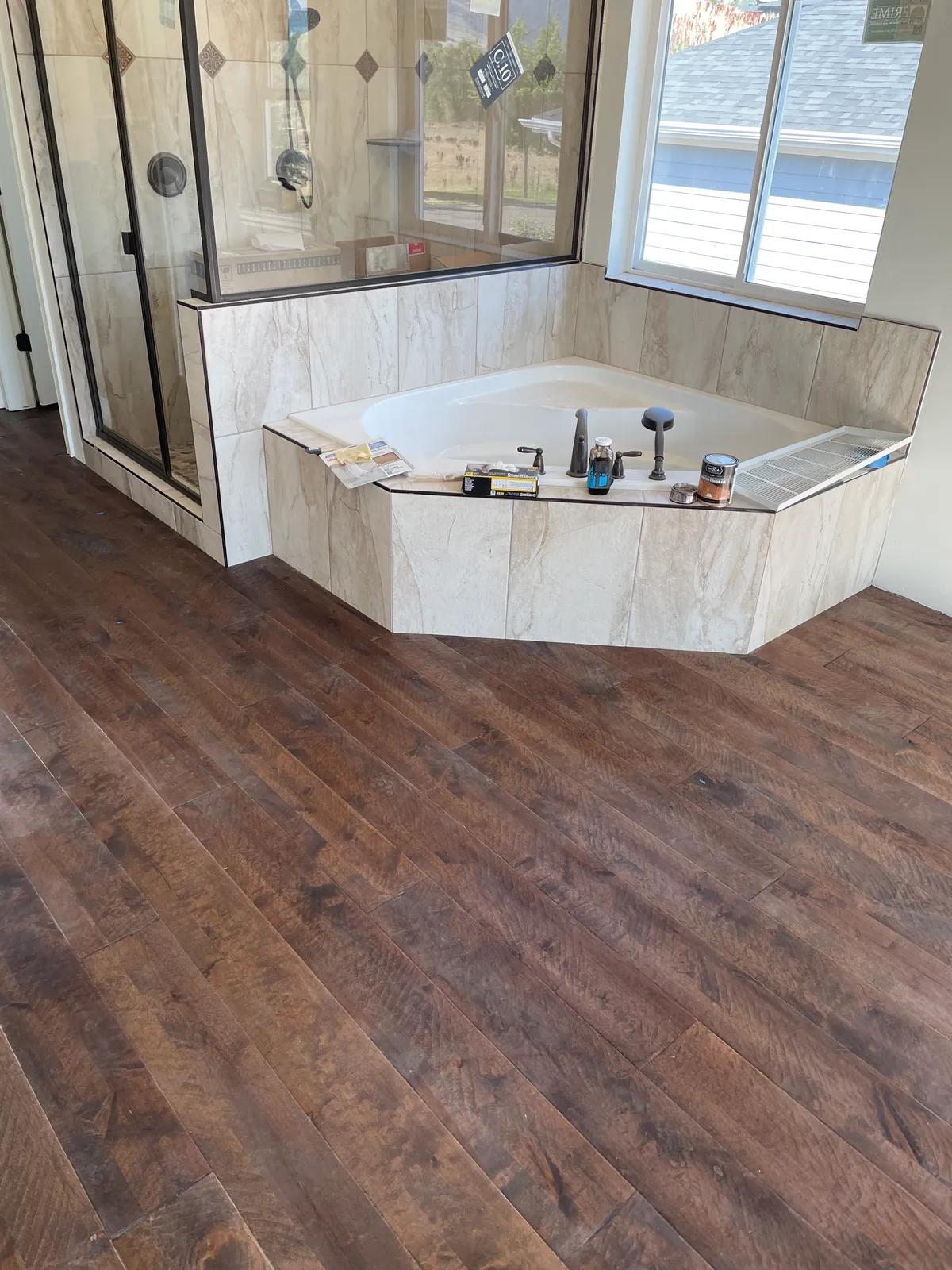
We love hardwood. We install a lot of it across Salt Lake, Provo, and Park City. But hardwood in a bathroom is asking for trouble. Even sealed hardwood will absorb moisture over time, leading to cupping, warping, and eventual rot. Utah’s dry climate means the wood will shrink in winter and swell in summer, and the bathroom humidity makes those swings even more extreme.
If you want the wood look in your bathroom, go with waterproof laminate or wood-look porcelain tile.
Standard (Non-Waterproof) Laminate: Not for Bathrooms
Standard laminate flooring and water are enemies. The fiberboard core absorbs moisture, swells up, and the whole floor is ruined. We’ve seen standard laminate bathroom floors destroyed in under a year. This is not the same product as waterproof laminate. GemCore and similar true waterproof laminate products use a composite core with a 3-part waterproof system specifically designed for wet rooms. If you’re buying laminate for a bathroom, verify it has a genuine waterproof system, not just a water-resistant surface.
Carpet: Please No
This should be obvious, but we still see it. Carpet in bathrooms is a hygiene nightmare. If you have it, replacing it is one of the best upgrades you can make.
Choosing Between Waterproof Laminate and Tile for Your Bathroom
This is the decision most of our clients end up making, so let’s make it simple.
Go with porcelain tile if:
- You’re doing a full bathroom remodel anyway
- You want maximum longevity (20+ years)
- You’re okay with the higher install cost
- You plan to add radiant floor heating
- You want a high-end, spa-like look
Go with waterproof laminate if:
- You want to keep costs down
- Comfort underfoot matters to you
- You’re updating the floor without a full remodel
- You want the project done quickly
- You have kids or older family members (softer landings)
Design Tips for Bathroom Floors
Go large format. Whether you’re choosing tile or waterproof laminate, bigger planks or tiles mean fewer grout lines or seams. That’s both a cleaner look and better water performance.
Lighter colors open up small spaces. Most bathrooms aren’t huge. A light oak waterproof laminate or a white/cream porcelain tile makes the room feel bigger. Dark floors in small bathrooms can feel like a cave.
Matte finishes hide water spots. Glossy bathroom floors show every water droplet and footprint. A matte or textured finish is more forgiving and looks more natural.
Think about the transition. Your bathroom floor meets your hallway or bedroom floor somewhere. Plan that transition intentionally, a flush transition strip or a complementary color palette makes the whole space feel cohesive.
The Utah Factor
Here’s something most national flooring guides won’t tell you: Utah’s climate makes your bathroom floor choice more consequential, not less.
Our dry winters (often below 15% humidity indoors) mean the rest of your house is extremely dry. Your bathroom is the one room where moisture is abundant. That contrast creates stress on flooring materials. Especially anything that expands and contracts with humidity changes.
This is why truly waterproof products matter here. A floor that’s “mostly water-resistant” might be fine in a humid climate where conditions are stable. In Utah, your bathroom floor has to handle the full spectrum (from desert-dry to steamy) sometimes in the same day.
For more on how Utah’s climate affects flooring choices throughout your home, check out our complete Utah climate flooring guide.
Ready to See Bathroom Flooring Options in Your Home?
Choosing bathroom flooring from a tiny sample in a big-box store is tough. Colors look different under fluorescent lights than they do in your bathroom. That’s why we bring the showroom to you, full-size samples, expert advice, and honest recommendations based on your specific bathroom, budget, and style.
We work with homeowners across the Wasatch Front, from Ogden to Provo, and we’ll help you find the right bathroom floor without the guesswork.
Book a free in-home consultation and let’s figure out the best option for your space.