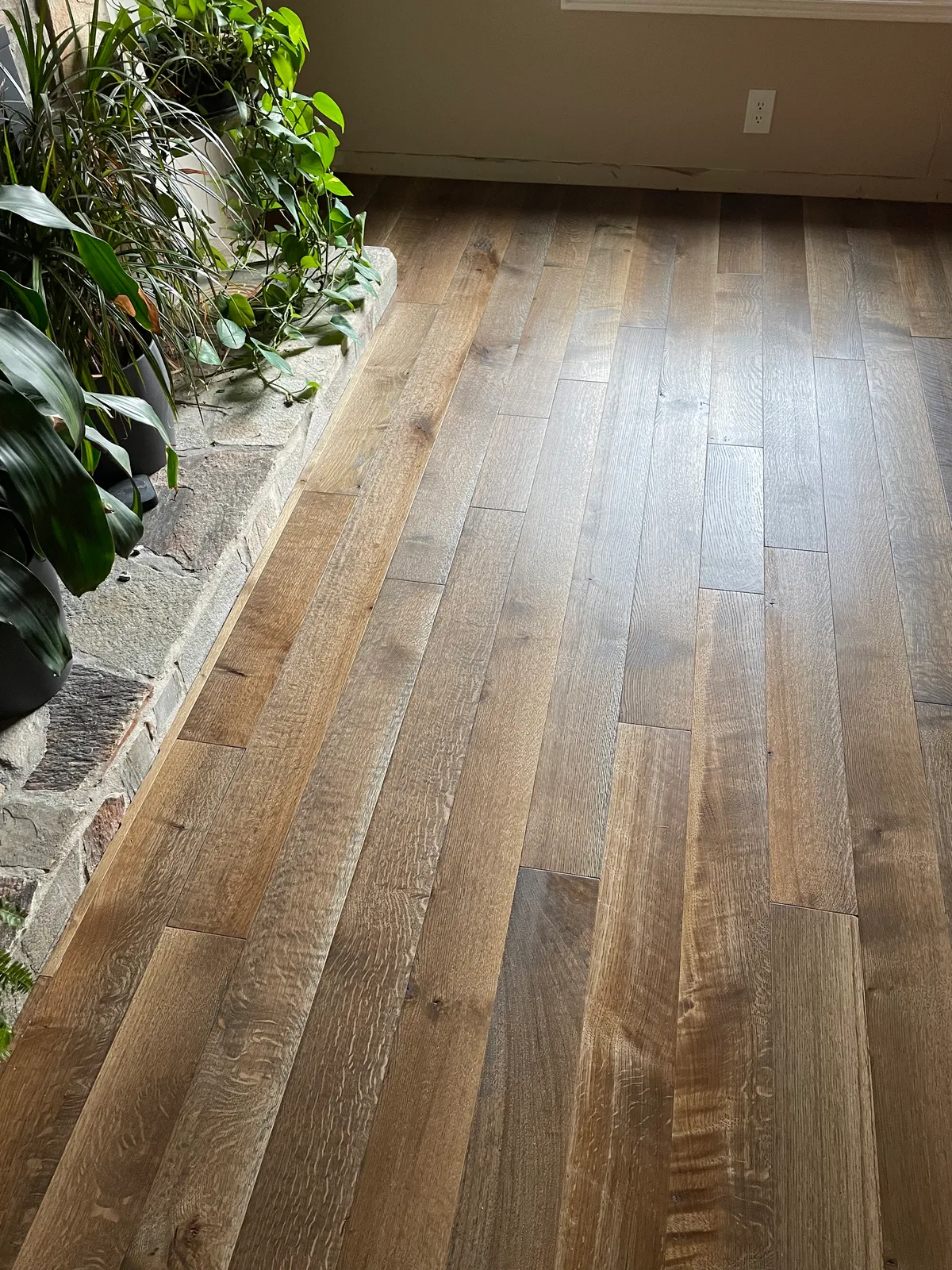
Gaps in hardwood floors are common in Utah, especially during dry winter months. Wood is a natural material. It expands and contracts as humidity changes, and Utah homes can get extremely dry once the heat is running.
The important question is not whether every tiny gap is bad. The question is whether the gaps are normal seasonal movement or a sign of a bigger flooring problem.
Quick Answer: Are Gaps in Hardwood Floors Normal in Utah?
Small gaps that show up in winter and tighten back up when humidity rises are often normal. Wider gaps, uneven gaps, cupping, loose boards, dark staining, or gaps that never close can point to a problem that needs repair.
In Utah, hardwood gaps are usually caused by one of five things:
- dry indoor air
- seasonal humidity swings
- boards that were too dry or too wet at installation
- moisture or subfloor problems
- older floors that have moved over time
If the floor is stable, flat, and the gaps are small, the answer may be humidity control and monitoring. If boards are loose, cupped, stained, cracked, or separating in multiple places, the floor should be inspected before you choose repair, refinishing, or replacement.
Why Hardwood Floors Gap in Utah
Utah’s dry climate is hard on wood flooring. In winter, furnaces pull indoor humidity down. When the air dries out, wood loses moisture and shrinks. That shrinkage can open narrow gaps between boards.
When humidity rises again, the boards can expand and some of those gaps may close.
This is why a floor can look different in January than it does in July. The movement is not always a failure. It is the floor reacting to the environment.
The bigger risk is when the movement is extreme, uneven, or connected to an installation or moisture problem.
Normal Seasonal Gaps vs. Problem Gaps
Use this as a practical filter.
| What You See | Usually Means | What to Do |
|---|---|---|
| Thin, even gaps during winter | Normal seasonal shrinkage | Monitor humidity and watch whether gaps close later. |
| Gaps that appear every winter and mostly close | Seasonal movement | Manage humidity and avoid overreacting. |
| Wide gaps that stay open year-round | Possible installation, moisture, or age issue | Inspect before filling or refinishing. |
| Gaps plus cupping or crowning | Moisture imbalance | Find the moisture source before repairing. |
| Loose boards or movement underfoot | Fasteners, subfloor, or board failure | Repair may be needed before refinishing. |
| Dark staining near gaps | Possible water or pet damage | Inspect depth of damage before deciding. |
The mistake is treating all gaps the same. Some are normal. Some are warnings.
When Hardwood Floor Gaps Need Repair
Gaps usually deserve a closer look when they are large, persistent, or connected to movement.
Call for an in-home evaluation if you see:
- gaps that do not close seasonally
- boards that feel loose or move underfoot
- uneven gaps in one specific area
- cupping, crowning, or buckling
- dark stains near the seams
- exposed tongues or nails
- cracking, splintering, or broken board edges
- gaps after a recent installation
Repair may be simple if the problem is isolated. A few boards can sometimes be replaced or tightened before the connected floor is refinished. If the problem is widespread, a larger repair or replacement plan may be cleaner.
Should You Fill Hardwood Floor Gaps?
Sometimes. Not always.
Filling small seasonal gaps can backfire because the floor may expand again when humidity rises. If filler is forced into a gap that normally closes, the expanding boards can push the filler out, crack, or create pressure in the floor.
Gap filling makes more sense when:
- the gaps are stable and not seasonal
- the floor is being professionally refinished
- the filler choice matches the floor and finish plan
- the cause of the gap is understood
It makes less sense when the floor is still actively moving or the humidity problem has not been addressed.
Repair vs. Refinish vs. Replace
Gaps alone do not automatically mean replacement.
Repair
Repair is usually the first option when the issue is isolated. That might mean replacing a few boards, correcting a transition, addressing movement, or fixing damaged areas before refinishing.
Refinish
Refinishing can improve the look of the floor if the boards are stable and the problem is mostly cosmetic. It can also help after repairs are made so the floor blends more cleanly.
Replace
Replacement starts to make sense when the floor is too thin, heavily damaged, poorly installed, unstable, or no longer worth saving. Replacement may also be the better answer if you want a different width, species, layout, or product construction.
If you are not sure which path fits, read refinishing vs replacing hardwood floors in Utah for the bigger decision framework.
How to Reduce Hardwood Gaps in Utah Homes
You cannot stop wood from moving completely, but you can reduce extreme movement.
The biggest prevention steps are:
- keep indoor humidity more stable when possible
- avoid letting the home get extremely dry in winter
- clean up water quickly near entries, kitchens, and pet areas
- use rugs or mats where snow, grit, and moisture enter the house
- choose the right hardwood construction for Utah conditions
- make sure installation includes proper acclimation and spacing
For many Utah homes, engineered hardwood is a safer starting point than solid hardwood because it is built for better dimensional stability. Solid hardwood can still work, but it needs the right conditions and expectations.
What We Check During an In-Home Consultation
When we look at gapping hardwood floors, we are not just looking at the visible cracks.
We check:
- whether the floor is solid or engineered hardwood
- board width, species, and finish condition
- whether the gaps are seasonal or permanent
- cupping, crowning, staining, or loose boards
- subfloor and transition issues
- entries, kitchens, stairs, and other high-risk areas
- whether repair, refinishing, or replacement is the cleaner path
The goal is to avoid guessing. A floor that looks scary in winter may only need humidity management. A floor that looks minor in photos may have a deeper moisture or subfloor problem.
FAQ
Are gaps in hardwood floors normal in Utah?
Small winter gaps can be normal in Utah because dry indoor air causes wood to shrink. Gaps become more concerning when they are wide, uneven, permanent, or connected to cupping, staining, loose boards, or movement.
When do floor gaps mean I need repair?
Repair may be needed when boards move underfoot, gaps stay open year-round, a few boards are damaged, or gaps are connected to water damage, pet stains, cupping, or exposed fasteners.
Can dry winter air permanently damage hardwood floors?
Dry air can create seasonal movement. Extreme or repeated dryness can make gaps more visible and may contribute to stress in the floor over time. Humidity management helps, but persistent gaps should be inspected.
Should I fill gaps in hardwood floors?
Do not fill gaps until you know whether they are seasonal. Filling a gap that normally closes can create new problems. Stable gaps can sometimes be filled as part of a professional refinishing plan.
Is engineered hardwood better for Utah gaps?
Engineered hardwood often handles seasonal movement better than solid hardwood because of its layered construction. It is not immune to movement, but it is usually a stronger default for Utah homes with dry indoor air.
Get the Floor Checked Before You Guess
If you are seeing gaps in your hardwood floors, the right next step is to understand whether the movement is normal, repairable, refinish-ready, or a sign the floor needs a bigger plan.
We bring the evaluation to your home, look at the actual floor, and help you decide what is worth saving and what needs to be fixed.
Book your Free In-Home Floor Fit Consultation