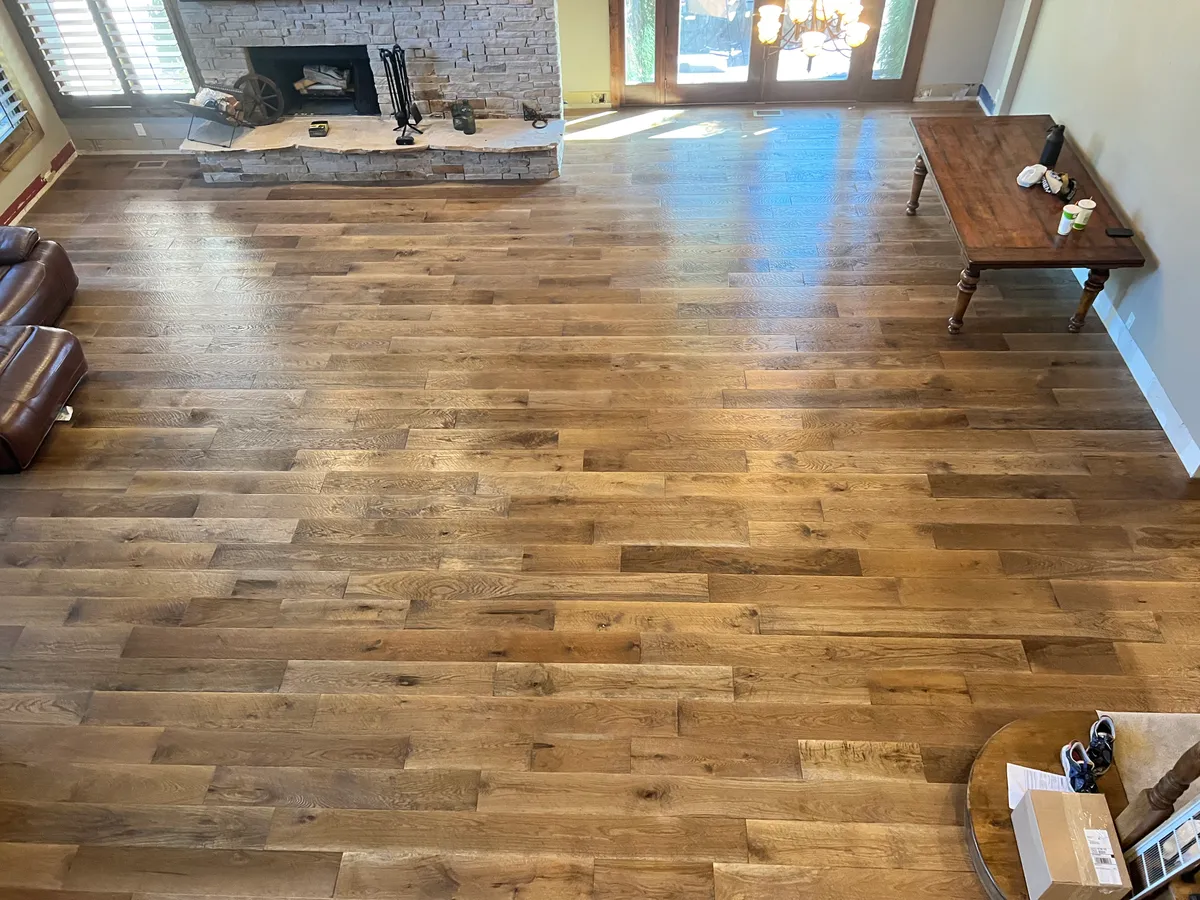
Millcreek is one of the most interesting flooring markets along the Wasatch Front. The city only incorporated in 2016, but the neighborhoods go back decades, ranch homes from the 1950s and 60s along 3300 South, split-levels from the 70s near Evergreen Avenue, and 80s builds scattered throughout. Neighboring Cottonwood Heights and Holladay share a similar renovation story on the east bench. It’s eclectic, it’s full of character, and almost every home has a flooring story to tell.
That story usually involves layers. Carpet over hardwood. Vinyl over tile. Old flooring over… something mysterious. Renovation in Millcreek means making decisions about what’s worth saving, what needs replacing, and how to blend modern flooring with homes that have real architectural personality.
Millcreek at a Glance
- Population: 64,487
- Home styles: 1950s–1960s ranch and rambler, 1970s split-level, 1980s traditional, scattered newer infill
- Common existing flooring: Original hardwood (often under carpet), sheet vinyl, mixed tile, wall-to-wall carpet installed over the decades
- Climate factors: Valley floor elevation around 4,400 feet. Standard Salt Lake dry-air challenges.
Millcreek homeowners tend to be renovation-minded. They bought a home with character and they want to enhance it, not erase it. That changes the flooring conversation significantly compared to new-construction cities.
Best Flooring Options
The Refinish-or-Replace Decision
In Millcreek’s older homes, the first question isn’t “what new floor should I buy?” It’s “what’s already under there?”
A surprising number of 1950s and 1960s Millcreek ranches have original hardwood, usually red oak strip flooring, hiding beneath carpet that was laid over it sometime in the 70s or 80s. Before you tear anything out, pull up a corner of carpet in a closet and look. If there’s hardwood underneath, you might have a floor worth saving.
When refinishing makes sense:
- The hardwood is structurally sound. No soft spots, no significant water damage, no major warping
- The boards are thick enough to sand (3/4-inch solid hardwood can usually be refinished 3–4 times)
- You like the character of original wood and want to preserve it
- Your budget allows $4–7 per square foot for professional sanding and finishing
When replacing is the better call:
- The existing hardwood has extensive water damage, particularly near bathrooms and kitchens
- Large sections are missing or were cut out for previous repairs or remodels
- The subfloor beneath has issues that need addressing
- You want a different look entirely, wider planks, different species, or a non-wood option
Refinishing original hardwood in a Millcreek ranch is one of the most satisfying renovation moves you can make. Those narrow red oak strips with a matte polyurethane finish look incredible. they have a warmth and authenticity that new flooring can’t replicate. If the bones are good, save them.
New Flooring That Respects the Architecture
When replacement is the right call, the goal in Millcreek homes is matching the flooring to the home’s era and character without making it feel like a museum. You’re renovating, not restoring.
For 1950s–1960s ranch homes:
-
Engineered hardwood in white oak, 5-inch plank: This bridges the gap between the original narrow-strip hardwood and modern aesthetics. A matte or natural finish keeps it from looking too contemporary against mid-century trim profiles and original cabinetry. It’s the most popular choice we see in Millcreek ranches.
-
Quality laminate in a classic wood tone: If the budget is tighter or you need waterproof performance (kitchens, basements), a warm oak-tone laminate works well in these homes. Avoid anything too trendy. No gray-wash, no ultra-wide planks. A 6-inch plank in a natural oak keeps the feel right.
For 1970s split-levels:
-
Split-levels are tricky because you’re dealing with multiple short stairways and level changes. Consistency matters here, running the same floor across every level ties the home together visually. Laminate is often the practical winner for split-levels because it handles the basement level, the main level, and the upper level without worrying about moisture differences between them.
-
If you go engineered hardwood on the main and upper levels, use laminate in a close color match for the lower level. Nobody wants to see an obvious material change at every landing.
For 1980s traditional homes:
- These homes tend to have more conventional layouts and handle modern flooring easily. Engineered hardwood or laminate, whatever fits the budget, both work without the architectural matching considerations of the older homes.
Millcreek-Specific Considerations
Older Subfloors Need Attention
This is the big variable in Millcreek. A 1958 ranch has a 68-year-old subfloor. It might be perfectly fine, many are. But it might have soft spots from old water damage, squeaks from nails that have worked loose over decades, or height inconsistencies from settling.
Any good installer will assess the subfloor before quoting a final price. In Millcreek, subfloor prep is more likely to be a meaningful line item than it would be in a newer city like Herriman. Budget for it. A solid subfloor is the foundation of a floor that performs well for decades, skipping prep to save a few hundred dollars is a bad trade. Our guide on how long flooring installation takes covers typical timelines including subfloor prep.
Asbestos Awareness
Homes built before 1980 may have asbestos-containing materials in original flooring, particularly 9x9 vinyl floor tiles and the black adhesive (called “cutback”) used to glue them down. If you’re pulling up old flooring in a pre-1980 Millcreek home, have it tested before you start demolition. The EPA’s asbestos guidance outlines safe handling and abatement procedures. Abatement adds cost, but it’s not optional, and a qualified installer will insist on it.
In many cases, you can install new flooring directly over old vinyl tile without disturbing it, which avoids the abatement issue entirely. This is worth discussing with your installer.
The Character Factor
Millcreek homeowners care about character. This isn’t a city where everyone wants the same gray laminate from a big-box store. The homes here have personality, original brick fireplaces, wood-paneled dens, knotty pine ceilings, and the flooring should complement that.
Our recommendation: bring samples home and see them in context. A floor that looks perfect in a Daybreak open-concept won’t necessarily work in a Millcreek ranch with existing wood trim and a stone fireplace. The relationship between your floor and everything else in the room matters more in homes with this much character.
Dry Climate Still Applies
Same rules as everywhere on the Wasatch Front. Solid hardwood is the highest-risk option for humidity swings. Engineered hardwood handles it well. Laminate is immune. If you refinish original hardwood, run a humidifier through winter to protect your investment. those original planks have survived 60+ years, but they’ll gap in dry air just like new ones would. Full details in our Utah climate flooring guide.
What Homeowners Are Choosing
Here’s what Millcreek renovation projects look like right now:
-
Most common project: Pulling up carpet to reveal and refinish original hardwood on the main level, then installing laminate in the kitchen, bathrooms, and basement. This gives you the best of both worlds, authentic character where it matters most, practical waterproof performance where you need it.
-
Full replacement projects: Engineered white oak hardwood through the main level with laminate in wet areas and the basement. Matte finishes are dominant: the high-gloss look from the 2010s is firmly out of style, and it looks especially wrong in mid-century homes.
-
Budget renovations: laminate throughout the entire home. When done in a warm, natural tone with a quality product, this can look excellent in any era of Millcreek home. It’s the best bang-for-the-buck upgrade, typically running $5–10 per square foot installed.
-
Style notes: Millcreek trends warmer and more natural than the valley average. Fewer cool grays, more honey oaks and natural walnut tones. This makes sense, warm flooring complements the warm materials (brick, wood, stone) already in these homes.
For full pricing information, see our 2026 flooring cost guide.
Your Home Has Character. Your Floors Should Too.
Every Millcreek home is different; that’s what makes this city great. We bring samples to your door so you can see how each option works with your home’s existing personality. No generic recommendations, no showroom guesswork.