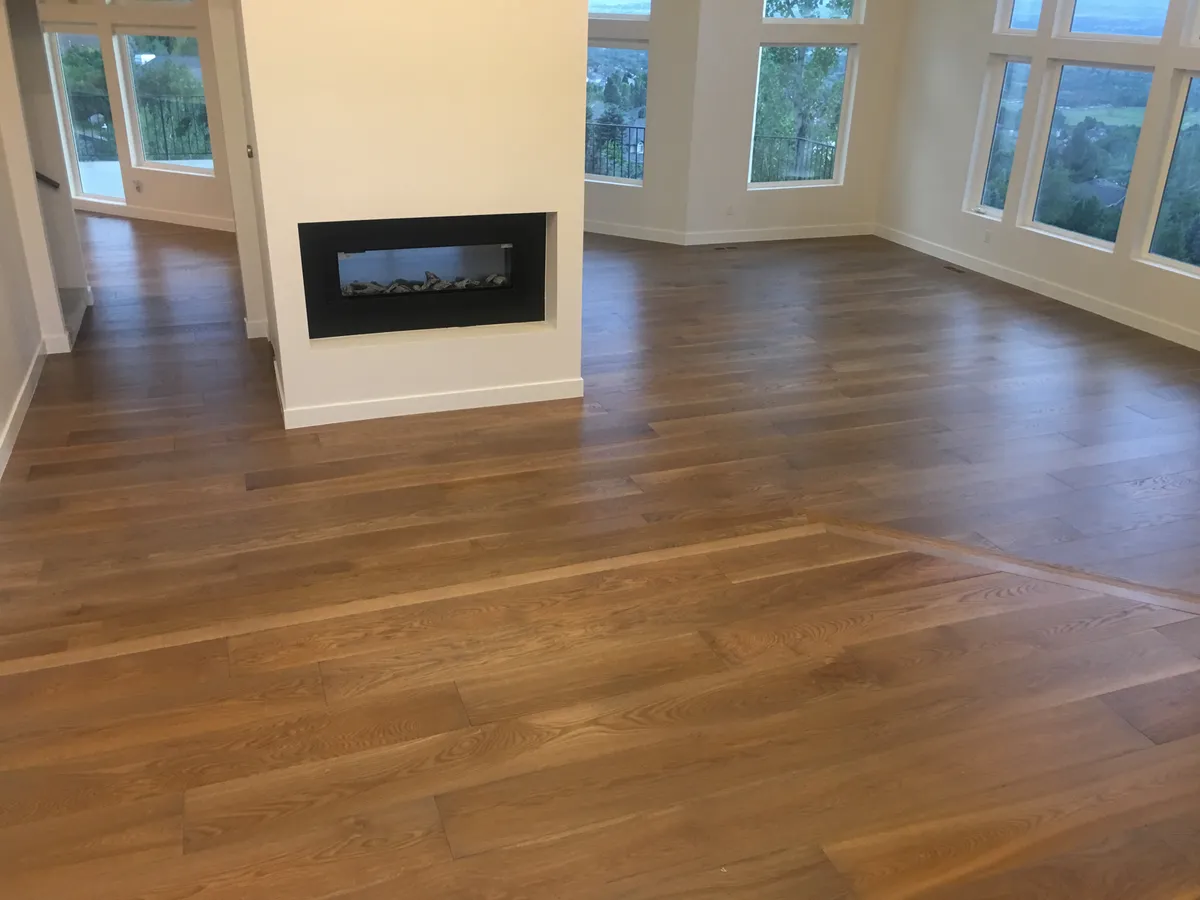
Cottonwood Heights and Holladay share more than a zip code boundary. Both sit on the east bench of the Salt Lake Valley, both have mature tree-lined streets, and both attract homeowners who care about quality. The property values support premium finishes, and the views of the Wasatch Range deserve floors that match.
We’re combining these two communities into one guide because the flooring considerations are nearly identical. If you live in either city, this is your guide.
Cottonwood Heights & Holladay at a Glance
With a combined population of about 62,000, these two cities form the heart of the east bench residential corridor between Millcreek and Sandy.
Holladay (pop. ~32,000) is one of the valley’s original suburban communities. The Holladay Village area anchors the neighborhood, and housing ranges from well-maintained 1960s ranches to renovated mid-century homes and newer custom builds along Cottonwood Lane and east of Highland Drive.
Cottonwood Heights (pop. ~34,000) has long been one of the most desirable addresses in the valley. Proximity to Big and Little Cottonwood Canyons, excellent schools, and housing that runs from 1960s homes along the lower bench to larger 1990s builds higher up toward the canyons.
Both cities share traits that matter for flooring: design-conscious homeowners, homes from the 1960s-1990s often being renovated, and abundant natural light with mountain backdrops.
Best Flooring Options for East Bench Homes
Premium Engineered Hardwood
This is where engineered hardwood really shines. East bench homes in Cottonwood Heights and Holladay have the property values, the natural light, and the design sensibility to justify premium wood flooring, and engineered hardwood delivers without the climate risk of solid wood.
What to look for at the premium level:
- European white oak: stable, takes stains beautifully, and the grain character is more interesting than domestic red oak. Wire-brushed and matte finishes are the current east bench standard.
- Wear layer of 3mm or thicker. A 4mm wear layer gives you 2-3 refinishes over the life of the floor.
- Wide plank format, 7” to 9” widths. The larger rooms and open floor plans in east bench homes call for wider planks.
- Matte or natural finish. The high-gloss hardwood look is over. Low-sheen, textured finishes show less dirt and let the wood grain speak for itself.
Installed cost for premium engineered hardwood: $11-18 per square foot. For Cottonwood Heights and Holladay homes, this is the investment that makes sense. The homes here support it, and the return at resale is strong.
For a full comparison with laminate, see our hardwood vs. Laminate guide.
waterproof laminate for Supporting Rooms
Even in premium east bench homes, laminate has a role. We recommend it for:
- Basements: even well-finished east bench basements sit on concrete, and moisture is moisture. SPC-core laminate is the right call below grade, regardless of the home’s value. See our basement flooring guide.
- Mudrooms and entryways: the canyon traffic through Cottonwood Heights means mudrooms earn their name. Ski boots, trail shoes, and wet dogs need a floor that doesn’t flinch.
- Bathrooms and laundry rooms: waterproof is non-negotiable in wet rooms.
For these spaces, choose a higher-end laminate that visually complements your hardwood. Many manufacturers offer laminate lines designed to coordinate with their hardwood collections, so transitions between rooms feel intentional rather than jarring.
Installed cost for premium laminate: $7-11 per square foot. Yes, that’s the upper end of the laminate range, but in a home where the main floors are $11-18/sq ft hardwood, a cheap-looking laminate in the basement ruins the continuity.
Solid Hardwood: A Calculated Choice
Some east bench homeowners want solid 3/4” hardwood, especially when matching existing floors. It can work in main-level living areas with consistent HVAC and a whole-house humidifier, but skip it over concrete, in rooms with intense sun exposure, and in basements.
Installed cost: $12-18 per square foot. Our honest recommendation for most east bench homeowners is premium engineered hardwood, 90% of the beauty with a fraction of the climate risk. More on that in our Utah climate flooring guide.
East Bench-Specific Considerations
Natural Light and Color Selection
East bench homes tend to have generous windows, and that natural light dramatically affects how flooring looks. A warm oak that looks perfect at 10am might read orange at 4pm when western light bounces off the mountains. This is exactly why we bring samples to your home.
Quick guidance by room orientation:
- South-facing: cooler-toned woods balance warm afternoon light
- East-facing: almost any tone works, morning light is neutral and flattering
- West-facing: avoid warm-toned floors that amplify the golden hour effect
- North-facing: warmer tones add life to spaces that can feel flat
UV exposure will also shift your floor color over time. Quality engineered finishes include UV inhibitors, but rotate area rugs periodically to prevent sun patterns.
Complementing Mountain Views
The best flooring in an east bench home doesn’t compete with the view. It frames it. Think of your floor as the canvas, not the painting. A clean, matte-finished European white oak in a natural stain lets the mountains be the focal point. Exotic species and trendy gray-wash finishes can date quickly and distract from what makes these homes special.
Renovating 1960s-1990s Homes
The east bench renovation wave is real. Homeowners are buying established homes here because the lots are larger, the trees are mature, and the bones are solid, then updating interiors to modern standards. A few things to plan for:
- Subfloor assessment is essential. Homes from this era may have particle board, plywood, or multiple layers of previous flooring underneath.
- Asbestos awareness. Some 1960s-70s homes have vinyl-asbestos tile beneath existing flooring. The EPA’s asbestos guidelines recommend testing before disturbing any suspected material.
- Open concept conversions are common. When walls come down, your flooring needs to flow seamlessly across the new space. Plan flooring as part of the architectural changes, not as an afterthought.
What East Bench Homeowners Are Choosing
The dominant trend is wide-plank European white oak in a natural or light matte finish. It’s clean, timeless, and works with both mid-century bones and modern renovation aesthetics.
For basements and secondary spaces, premium laminate in a coordinating tone is the standard, homeowners want cohesion between floors. We’re also seeing more herringbone or chevron patterns in entryways and dining rooms, adding architectural interest that suits the design-forward east bench mindset. For broader inspiration, our 2026 flooring trends guide covers what’s gaining traction across Utah.
The typical east bench flooring investment runs $12,000-25,000 for a full-home project. In communities where homes regularly sell above $600K, that’s a proportional investment buyers notice. See our 2026 cost guide for a full breakdown.
Ready to See Premium Flooring in Your East Bench Home?
We’ll bring curated samples of engineered hardwood, premium laminate, and specialty options to your Cottonwood Heights or Holladay home. See how they look in your natural light, against your cabinets, with your mountain views. No showroom trip, no pressure. Just informed decisions in the space that matters.