Pleasant Grove at a Glance
Pleasant Grove has a personality that’s different from the newer suburbs to the west. Just under 38,000 residents, housing stock spanning 1960s ranchers to modern infill builds. Tree-lined streets near downtown, older neighborhoods along 100 East, craftsman-influenced homes through the established blocks, Pleasant Grove feels like a town with history, not a subdivision that appeared overnight.
That matters when you’re choosing flooring. A home built in 1975 has different subfloor conditions and aesthetic language than one built in 2015. The flooring that works in a new Saratoga Springs build might feel wrong in a Pleasant Grove split-level with original wood trim and warm cabinetry.
Best Flooring Options
Engineered Hardwood: The Character Play
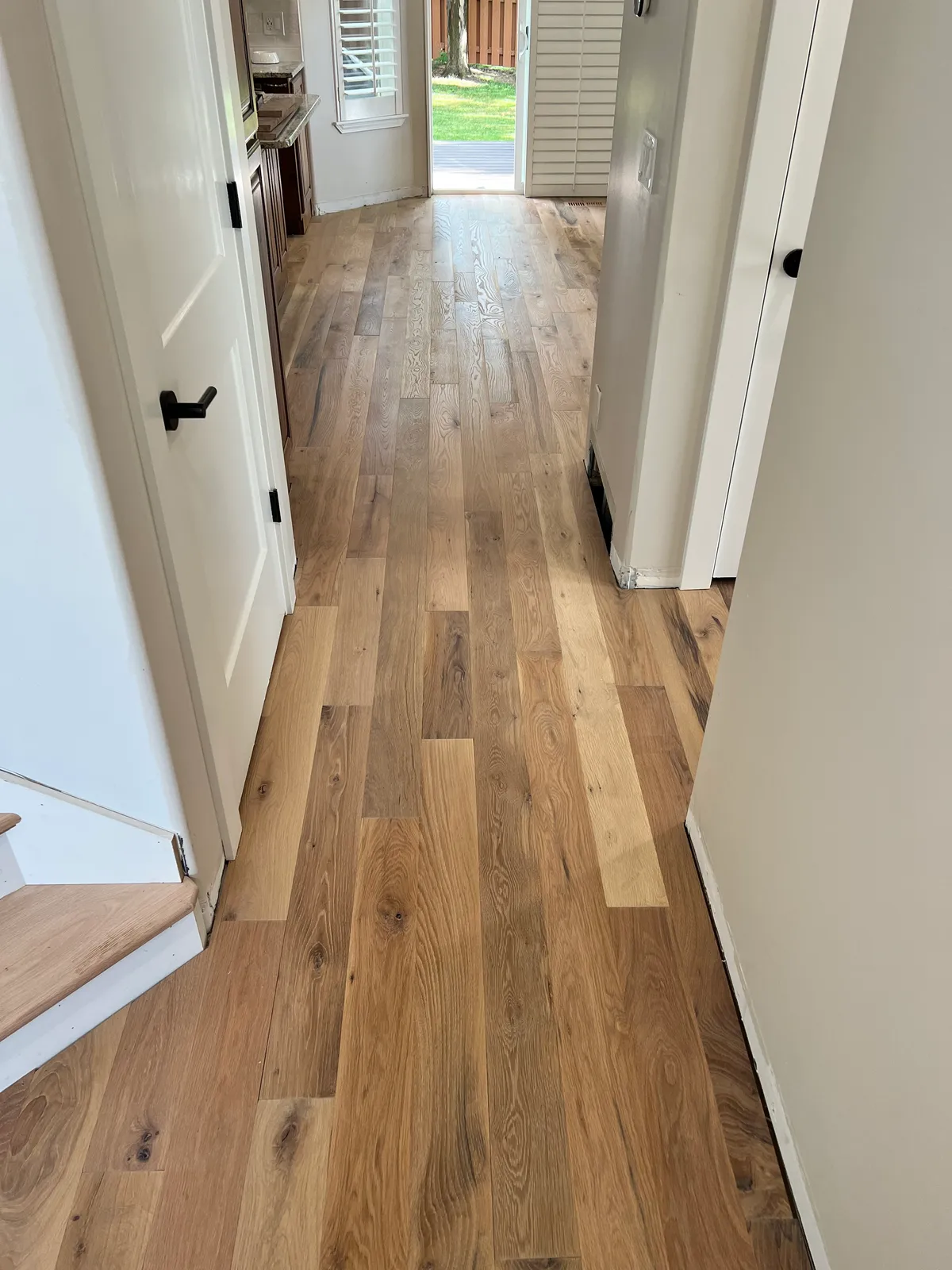
For Pleasant Grove homes with existing wood trim and a warm architectural identity, engineered hardwood feels right. It speaks the same language as the rest of the home.
The key is matching. If your home has original oak trim and stair rails, common in 1980s and 1990s builds, a white oak engineered hardwood in a complementary tone ties everything together without replacing every piece of trim.
Width matters more here than in newer homes. Wide-plank floors (7”+) can overwhelm a traditionally proportioned room. A 5” plank often feels more proportional. Subtle detail, real difference.
Laminate: The Practical Workhorse
laminate plays a slightly different role in Pleasant Grove than in newer cities. In established homes, it shines in specific zones:
Basements. Many Pleasant Grove basements were finished decades ago. That old carpet needs to go. Laminate over a concrete slab is the right answer every time: the single most impactful upgrade for an older basement.
Kitchens and bathrooms. If the rest of the home is getting hardwood, these rooms should get laminate. Same wood-look aesthetic, zero moisture risk.
Rental suites and ADUs. Pleasant Grove has a growing number of basement apartment conversions. Laminate is ideal, durable for tenant use, waterproof below grade, and cost-effective.
In newer homes on the east side and in Canyon Heights, laminate works as a whole-home solution the same way it does in any modern Utah build.
Tile: Still Relevant in the Right Spots
Older homes sometimes have tile in unexpected places. If you’re doing a room-by-room update rather than a full gut, keeping existing tile where it makes sense and running new flooring around it is a legitimate strategy.
Pleasant Grove-Specific Considerations
Older Subfloor Challenges
This is where Pleasant Grove projects differ most from work in newer cities.
Uneven subfloors. Older plywood and particle board settle over time. Click-lock laminate and engineered hardwood both need a reasonably flat surface, within 3/16” over a 10-foot span. Self-leveling compound handles minor dips; more significant issues may require subfloor replacement in sections.
Multiple layers. It’s common to pull up carpet in a 1970s home and find linoleum underneath, with another layer beneath that. Sometimes you can float over a solid existing layer, other times everything comes out.
Asbestos. Homes built before 1980 may have vinyl flooring or adhesive containing asbestos. Have it tested before disturbing it: the EPA provides guidance on asbestos in homes. Many products can float over encapsulated asbestos-containing material.
We assess subfloor conditions during our in-home consultation. No surprises on installation day.
Matching New Flooring to Existing Character
The biggest mistake we see in Pleasant Grove renovations is choosing flooring that fights the house. A trendy gray-washed laminate in a 1985 home with honey oak cabinets looks disconnected, a floor trying to be something the house isn’t.
Work with what’s there. If the cabinets and trim are warm, go warm with the floor. If you’re planning to paint the trim white (a popular update), that opens up more options, but paint the trim first, then choose the floor.
If the home has original hardwood under the carpet, and some Pleasant Grove homes do, refinishing it is worth exploring. The National Wood Flooring Association (NWFA) recommends professional assessment before refinishing. A sand-and-refinish on solid hardwood can bring it back to life for less than new flooring, preserving the home’s character.
Climate
Pleasant Grove sits at about 4,700 feet and gets the same dry winters as the rest of Utah County. The climate considerations for Utah flooring apply fully, engineered hardwood over solid, proper acclimation, and laminate for any below-grade areas.
What Homeowners Are Choosing
Pleasant Grove trends split along the age of the home.
Older homes (pre-2000): Engineered hardwood on the main floor, laminate in the basement. Natural or lightly stained white oak is the top pick. It bridges traditional and contemporary in a way that works with existing trim. The goal is a floor that looks like it belongs, not one that was dropped in from a different era.
Newer homes (2000s+): The approach matches what we see in Lehi or American Fork, laminate throughout, or laminate with engineered hardwood on the main floor. A realistic wood-look laminate in a warm oak tone is the default.
Renovation projects: For homeowners opening floor plans, updating kitchens, and finishing basements, flooring is part of a larger design conversation. Our flooring cost guide covers current pricing.
See the Options in Your Home
Pleasant Grove homes have more variety than most Utah cities, a sample that looks perfect in one home might clash in another. Seeing flooring in your actual space, next to your actual trim and cabinets, matters more here than almost anywhere.
We bring curated samples to your door, assess your subfloor, measure your rooms, and give you a clear quote. One visit, no guesswork.