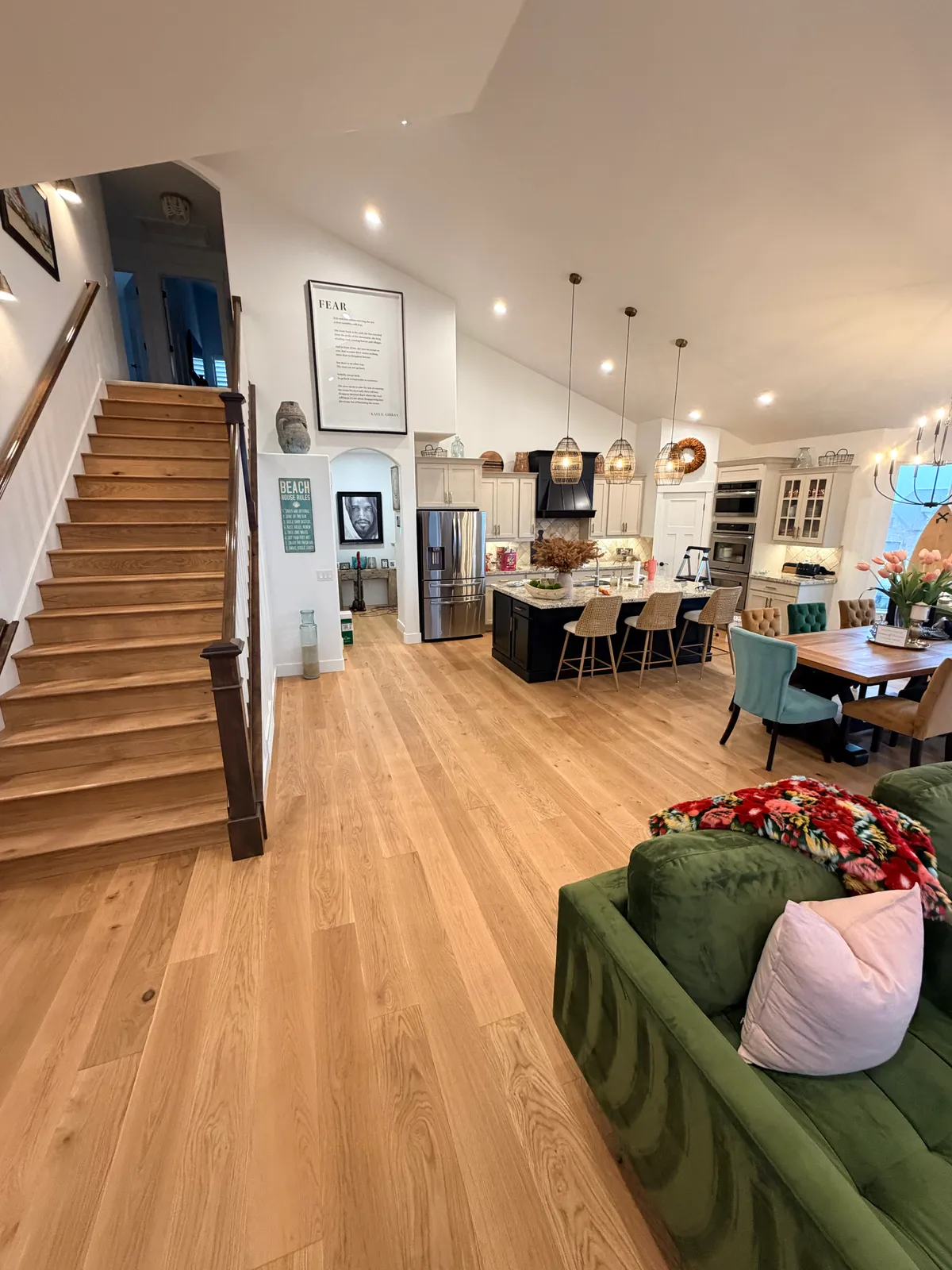
Provo isn’t one housing market; it’s two. You’ve got the BYU-driven rental market where landlords need floors that survive semester after semester of student tenants. And you’ve got the established family neighborhoods, Tree Streets, Edgemont, Grandview, the Joaquin area, where homeowners want floors that hold up to large families and look great doing it.
The flooring that makes sense for a rental duplex near 700 North is completely different from what works in a four-bedroom on Timpview Drive. This guide covers both sides, so whether you’re a landlord managing units or a family putting down roots, you’ll know exactly where to put your money.
Provo at a Glance
With a population of about 114,766, Provo is Utah County’s anchor city. BYU brings roughly 35,000 students who need housing, concentrated between 500 North and 900 North, along Freedom Boulevard, and south toward the Joaquin neighborhood.
On the owner-occupied side, the Tree Streets (University Avenue to 900 East) have charming 1920s-1940s homes. Edgemont is a premier family neighborhood on the east bench. Grandview and Rock Canyon offer 1970s split-levels with larger lots. Each era has its own flooring considerations.
Best Flooring for Provo Rental Properties
Student tenants are hard on floors; that’s just the reality of high-turnover housing. Your priorities are durability, cost, and easy replacement.
Laminate: The Landlord’s Best Option
Waterproof laminate is the runaway winner for Provo rentals. At $4–$8 per square foot installed, it lasts 8-12 years in a rental, individual planks can be swapped if damaged, and turnover prep is just a mop. Compare that to carpet, which needs replacement every 3-5 years and professional cleaning between tenants. Over a decade, laminate saves most landlords $3,000–$5,000 per unit.
You don’t need top-of-the-line for rentals. A 5-6mm rigid-core product with a 12-mil wear layer handles student traffic fine. For a deeper breakdown, see our laminate vs. hardwood comparison. Stick with medium-tone neutrals that hide dirt and scuffs.
What to Skip in Rentals
Carpet is cheap upfront but the most expensive floor over time, constant replacement and cleaning. Hardwood will get destroyed, and refinishing costs negate any value advantage.
Best Flooring for Provo Family Homes
Different calculus when you live there. You want aesthetics, longevity, and floors that survive Utah family life, lots of kids, lots of traffic, zero time for fussy maintenance.
Engineered Hardwood: The Main-Level Standard
For main living areas in Edgemont, the Tree Streets, or Grandview, engineered hardwood is our top pick. At $8–$14 per square foot installed, it’s an investment, but it makes a home feel finished. Engineered handles Utah’s dry winters (indoor humidity drops to 15%) far better than solid hardwood. More on that in our climate guide.
We recommend white oak in a matte finish with wider planks (6-7”) and a wear layer of at least 3mm for future refinishing: the National Wood Flooring Association (NWFA) sets the standard for refinishable wear layer thickness. Wire-brushed textures hide the minor scratches that come with five kids running through the kitchen, which isn’t unusual in Provo.
Laminate: The Whole-Home Workhorse
Plenty of Provo families are going all-laminate, and it’s a great call with young kids and pets. The key is stepping up quality. skip the rental-grade stuff and invest in a premium laminate at $6–$10 per square foot installed with a thicker core (7-8mm) and 28-mil+ wear layer. Cheap laminate feels like plastic. Quality laminate feels like a floor.
Between sippy cups, muddy shoes from Rock Canyon, and the inevitable science fair volcano, waterproof floors just make life easier.
Provo-Specific Considerations
Large Family Traffic Patterns
A home with four, five, or six kids puts flooring through a stress test that product reviews don’t account for. Step up to 20-mil wear layers (laminate) or 3mm+ (hardwood). Choose textured finishes, wire-brushed or hand-scraped, and that camouflage scratches. And use area rugs in high-traffic zones; they’re cheaper to replace than refinishing.
Older Homes in the Tree Streets
The Tree Streets homes (1920s-1940s) often have original hardwood hiding under carpet. Pull back a corner before installing anything new, refinishing the original wood preserves character and can cost less than replacement. Nearby Springville has similar craftsman-era homes with the same opportunities. Budget for leveling work on these century-old subfloors, and run flooring continuously between the small rooms to make the floor plan feel open.
Split-Levels in Grandview
Provo’s 1970s-1980s split-levels have the classic challenge: different floor levels and multiple staircases. Choose one floor and carry it through every level. Invest in proper stair nosing, stairs are the first thing you see in a split-level, and cheap stair work ruins an otherwise good floor job.
What Provo Homeowners Are Choosing
Rental owners are ditching carpet fast. Laminate is the standard, with typical projects running $2,500–$5,000 per unit. Landlords report lower turnover costs, faster tenant placement, and fewer maintenance calls.
Family homeowners are choosing engineered hardwood for main floors and laminate for basements and wet areas. Full-home projects run $10,000–$20,000 depending on square footage and product selection. For Utah County pricing details, see our 2026 flooring cost guide.
See the Options in Your Home
We bring the showroom to you, whether you’re at a rental property on 800 North or a family home up in Edgemont. Book a free in-home consultation and we’ll bring samples, assess your subfloor, and walk you through the options that make sense for your specific situation.