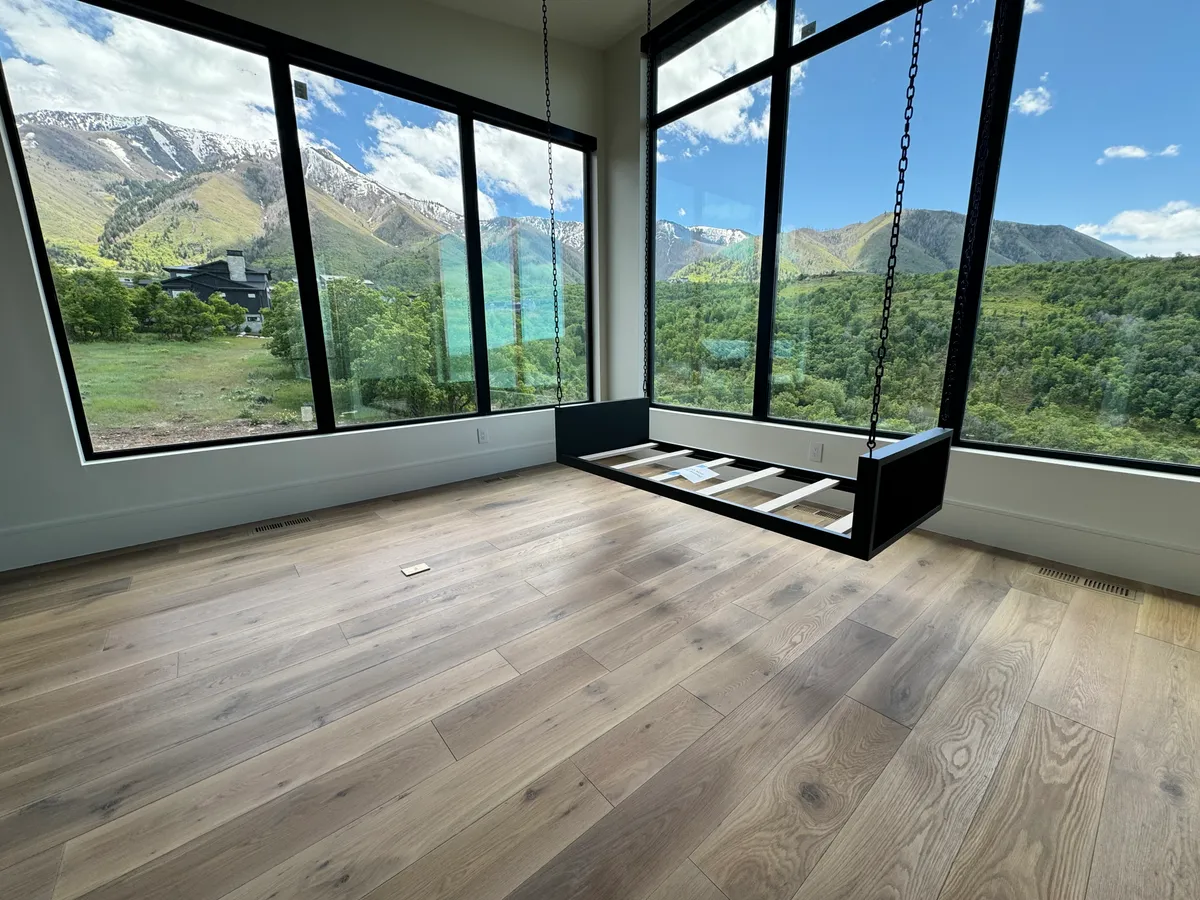
Flooring Guide for Alpine & Highland Homes
Short version: for Alpine and Highland mountain-modern homes, choose premium engineered hardwood as the primary floor, reserve laminate and tile for specific wet or high-traffic zones, and plan installations with elevation and long sight lines in mind. Below is what works, why it works here, and what to expect when you book a free in-home consult.
Alpine & Highland — quick neighborhood context
- Elevation and climate: homes sit roughly 4,800–5,400 ft. Dry winter indoor humidity is normal and drives seasonal movement in wood floors.
- Stock of homes: custom builds and higher-end remodels; buyers expect real-wood floors on main levels.
- Style: mountain modern — wide-plank, light tones, matte/satin finishes, clean transitions, and big open sight lines.
Recommended floors (what we specify on Alpine/Highland projects)
Engineered hardwood — the default choice
- Why: real-wood surface without the seasonal movement problems of solid wood at this elevation. Engineered floors stay tighter through Utah’s dry winters.
- Materials & specs to insist on:
- European white oak or domestic white oak, wide plank (7”–9”) for that mountain-modern look.
- Veneer thickness 4 mm or greater so the floor can be refinished in the future.
- Quality core construction (multi-ply or HDF with good adhesive) to resist cupping.
- Factory-applied matte or low-sheen finish — better for living with kids, dogs, and light.
- Finish & color: natural/nude tones photograph and resale better in this market; avoid high-gloss.
Laminate — targeted use, not whole-house
- Use for mudrooms, busy laundry rooms, and some basements where you want the look of wood with higher scratch and moisture tolerance.
- Pick high-quality, bevel-free or micro-bevel boards that visually coordinate with upstairs hardwood.
Tile & natural stone — accent moments
- Stone (honed limestone, travertine, or slate) works well in entryways or as a practical mudroom surface. Porcelain tile is the better waterproof option for baths and laundry.
Installation notes specific to Alpine & Highland
- Radiant heat: engineered hardwood is generally compatible if the product is rated for radiant. Keep surface temps below about 85°F and prefer glue-down or direct-bond installations for best heat transfer.
- Acclimation: longer acclimation windows in winter — plan 5–7 days on-site and verify subfloor moisture and humidity first.
- Seaming & sight lines: use longer plank lengths where possible to reduce visible seams across large open rooms.
- Transitions: minimize them. Plan transitions at natural doorways and landings — visible transition strips break the continuous mountain-modern look.
Design decisions that matter on big sight lines
- Run planks along the longest sight line (entry through to the rear) to make spaces feel larger.
- View a full plank across the room — samples can mislead because lighting from canyon-facing windows alters tone and sheen.
- When matching upstairs/downstairs, keep tonal relationships consistent. Coordinated but not identical floors read as intentional.
Durability & maintenance in a mountain home
- Matte factory finishes hide scratches and dust; satin is second-choice.
- Use area rugs in high-traffic zones and under dining tables to limit concentrated wear.
- For dog-friendly homes, choose harder white oak grades and tighter finish sheens — not darker timbers like walnut which show scratches more.
Resale and value
- In Alpine/Highland pricing bands, real hardwood (engineered, 4 mm+ veneer) is expected on main living levels. Cheap-look floors can reduce perceived value; quality floors help a home show better and sell faster.
Where laminate and tile make sense here
- Mudrooms and entries exposed to trail boots and salt.
- Below-grade family or rental suites where waterproofing and cost control matter.
- Bathrooms and laundry — porcelain tile preferred unless you choose a waterproof engineered product rated for bathrooms.
What we do on the first visit (what to expect from a Plank & Go in-home consult)
- We bring full-length planks, full-size samples, and coordinating trim to view in your lighting and against your walls.
- We measure, check subfloor and radiant-heat systems, and recommend installation method (glue-down vs floating), acclimation time, and transition placement.
- We provide a written on-site quote and a clear timeline — one visit, no pressure.
Ready to see how your light and layout change a floor choice? Book a free in-home consultation and we’ll bring planks to your Alpine or Highland home so you can pick with confidence.
What to have ready for the visit: rough square footage, any known subfloor or moisture issues, and the rooms you want to prioritize (main level, mudroom, basement). Expect a 45–60 minute visit for a full assessment.
Plank & Go — we install what we recommend and back our advice with local experience. Book your consult and see the actual planks in your mountain light.