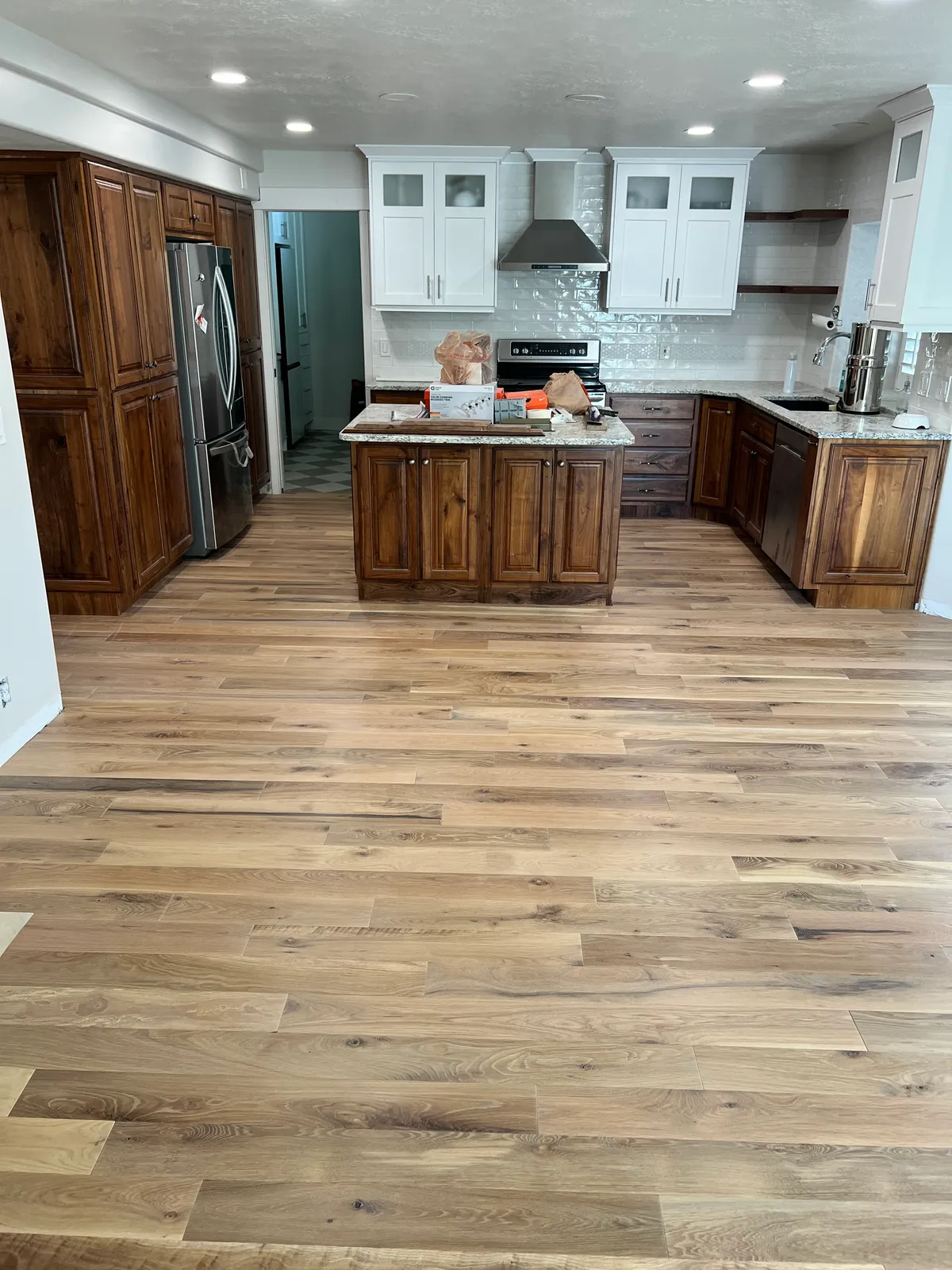
Magna is one of the best-kept secrets on the west side of the valley. Home prices are still reasonable, and there’s a ton of renovation opportunity in older housing stock that just needs someone to see the potential.
If you’re a Magna homeowner thinking about new floors, whether you’re updating a starter home, prepping to sell, or just tired of carpet from the Carter administration. This guide covers the best options, subfloor challenges in older homes, and where to put your money for the biggest return.
Magna at a Glance
Magna sits on the west side of the valley with a population of about 32,440. The housing here is predominantly older. Think 1940s through 1980s construction. You’ll find a lot of ramblers, split-levels, and modest single-family homes that were built for working families and priced accordingly.
That older housing stock is an opportunity. Many of these homes haven’t had a major update in decades, and new flooring is the single biggest visual upgrade you can make. The neighborhoods around Pleasant Green Cemetery, south of 3500 South, and between 8000 West and 7200 West all have solid bones. they just need cosmetic love. Nearby Kearns and West Valley City share a similar renovation opportunity.
Best Flooring Options for Magna Homes
waterproof laminate: The Best Value Play
For most Magna homeowners, laminate is the answer. Here’s why: it gives you a modern, clean look at an installed price that won’t wreck your budget. A quality laminate runs $5–$9 per square foot installed, depending on thickness and wear layer.
laminate handles moisture, pet accidents, kid spills, and heavy foot traffic without flinching. It clicks together over most existing subfloors with minimal prep, which matters when you’re dealing with older Magna homes where subfloor conditions are unpredictable.
Go with a rigid-core (SPC) product that’s at least 6mm thick with a 20-mil wear layer. SPC bridges minor subfloor irregularities better than flexible laminate. For the look, a mid-tone oak or walnut pattern reads as updated without being trendy enough to date the home in five years.
Engineered Hardwood: The Resale Booster
If you’re planning to stay in your Magna home long-term or you’re renovating to sell at the top of the local market, engineered hardwood is worth the step up. Installed cost runs $8–$14 per square foot, but it adds real perceived value that buyers notice.
Engineered hardwood handles Utah’s dry winters better than solid hardwood (read more in our climate guide), and it can be floated over most subfloors, a real advantage in older construction.
Magna-Specific Considerations
Dealing with Older Subfloors
This is the big one. Homes built in the 1940s through 1970s often have subfloor situations that newer homes don’t. Here’s what we commonly see in Magna:
Uneven plywood or board subfloors. Older homes settle. The subfloor that was flat in 1965 might have a quarter-inch dip across eight feet now. The fix is usually self-leveling compound for minor dips and sistering joists for serious issues. This prep typically adds $1–$3 per square foot, but skipping it is a false economy. You’ll end up with soft spots, gapping, or creaking.
Old adhesive residue. Pulling up vintage vinyl often reveals black mastic that can contain asbestos in pre-1980 homes. Don’t sand or scrape it aggressively: the EPA’s asbestos guidance covers safe handling procedures. A floating floor (laminate) can go right over it after proper encapsulation, avoiding the abatement headache.
Concrete slabs with moisture. Some Magna ramblers sit on slab without a proper vapor barrier. Always moisture-test before installing. If moisture is present, laminate with a built-in moisture barrier is the safest route.
Utah’s Dry Climate
Magna gets the same bone-dry winters as the rest of the valley, indoor humidity can drop to 15% in January. Laminate is largely unaffected by humidity swings, which is another reason it’s our top pick. If you go with engineered hardwood, plan on running a humidifier. Our Utah climate flooring guide covers this in detail.
What Magna Homeowners Are Choosing
laminate dominates in Magna. Homeowners here are practical. they want something that looks great, holds up to real life, and doesn’t cost $15,000 for a 1,200-square-foot home.
The most popular projects we see:
- Whole-home laminate installs replacing old carpet and vinyl, usually 800 to 1,200 square feet, running $5,000–$9,000 installed depending on subfloor prep needed.
- Kitchen and main living area upgrades in the $2,500–$5,000 range, often paired with new paint and trim for a full refresh.
- Pre-sale flooring updates where sellers spend $4,000–$7,000 on new floors and see $10,000–$15,000 in added perceived value. In Magna’s market, this is one of the highest-ROI renovations you can do.
For more on how flooring affects home value, check out our 2026 flooring cost guide and our breakdown of whether new flooring increases home value.
See the Options in Your Home
We bring the showroom to you. Book a free in-home consultation and we’ll walk through your space, check your subfloor, and show you samples that make sense for your home and budget. No showroom pressure, no guessing how a floor will look under someone else’s lighting.