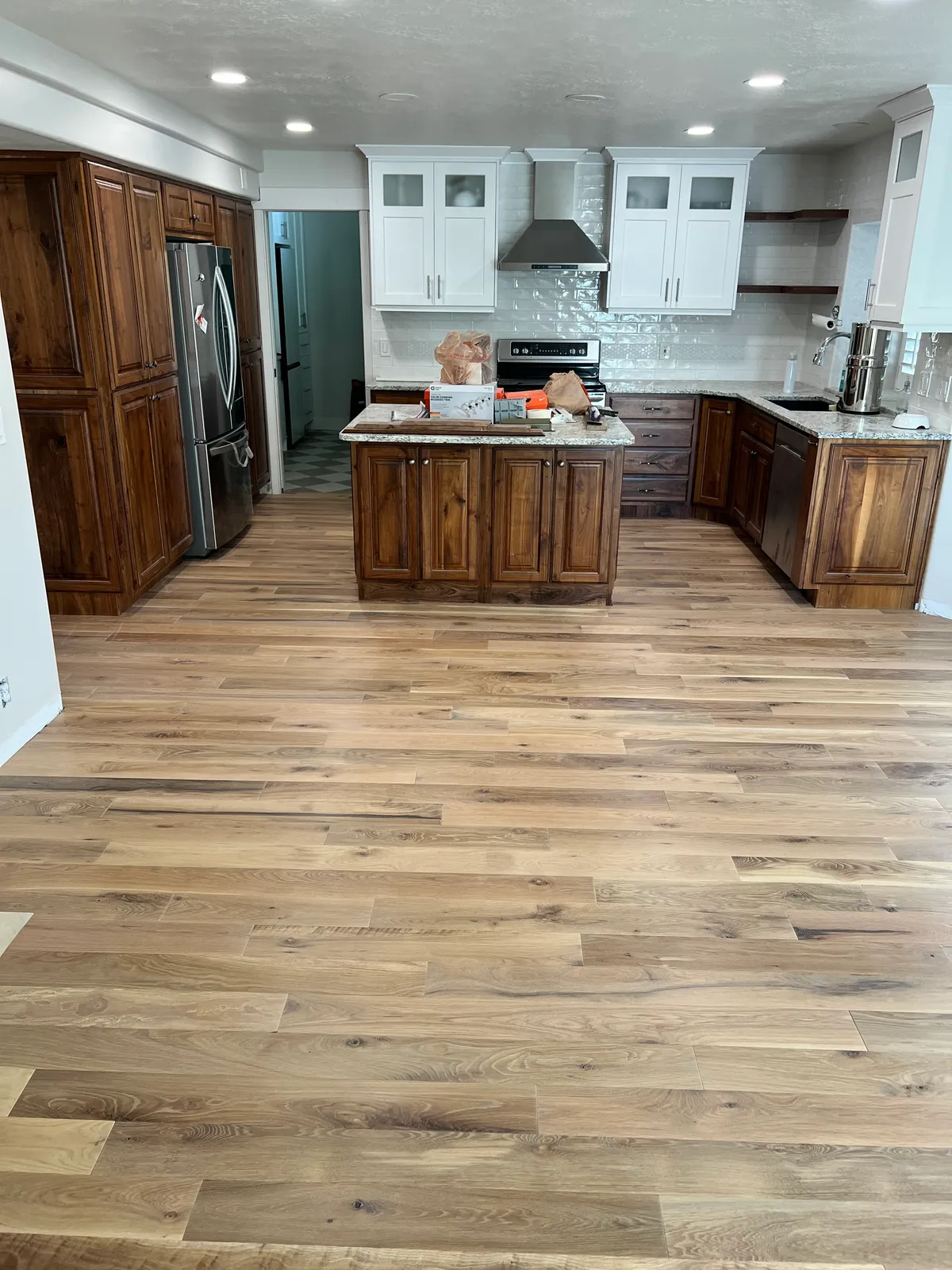
West Valley City is the largest suburb in Utah and one of the most diverse communities in the state. It’s also a city where most homeowners are making practical decisions. You want flooring that looks great, holds up to real family life, and doesn’t break the bank.
That combination is absolutely achievable. This guide covers what works best in West Valley’s housing stock, what to watch out for, and how to get the most value from your flooring investment.
West Valley City at a Glance
Population around 137,000: the second-largest city in Utah. Housing is predominantly 1970s through 2000s construction: split-levels, bi-levels, ramblers, and two-story suburban homes, similar to neighboring Taylorsville and Kearns. Same Salt Lake Valley elevation (around 4,300 feet), same dry-climate considerations, winter humidity drops, seasonal temperature swings, the usual Utah wear on building materials.
West Valley is one of the most diverse communities in the state, with multi-generational households more common here than in most Salt Lake suburbs. That matters for flooring. More people under one roof means higher traffic and floors that need to work for everyone from toddlers to grandparents.
Best Flooring Options for West Valley City
waterproof laminate: The Sweet Spot
laminate with an SPC core is tailor-made for West Valley homes. Kids, pets, high-traffic hallways, busy kitchens, a 20-mil wear layer handles all of it. It’s waterproof (no anxiety about spills or wet boots), budget-friendly without looking budget ($5–$7/sq ft installed looks genuinely good), and maintenance is just sweep and damp-mop.
Installed cost: $6.50–$10 per square foot.
Engineered Hardwood: The Upgrade Pick
For homeowners who want the warmth and prestige of real wood, engineered hardwood is the way to go. It handles Utah’s dry climate significantly better than solid hardwood, and it adds measurable value to your home.
Engineered hardwood makes the most sense on main levels where you want a premium look, living rooms, dining areas, and master bedrooms. Pair it with laminate in the kitchen, bathrooms, and basement for the best of both worlds.
Installed cost: $11–$18 per square foot.
For a full comparison of these materials in Utah’s climate, check out our guide to the best flooring for Utah’s dry climate.
West Valley City-Specific Considerations
Replacing Worn-Out Carpet
This is the number-one flooring project in West Valley City. Homes built in the 70s, 80s, and 90s were carpeted wall to wall, and that carpet is now 20–40 years old. Replacing it with hard-surface flooring transforms the home immediately. The most common move: laminate through the main living areas and hallways, with carpet kept in bedrooms if budget is a concern.
The good news: carpet removal is one of the cheapest demo jobs. No grinding, no chipping. Just pull, roll, and haul away.
1970s–1980s Homes: What to Expect
Under the carpet you’ll typically find plywood subfloors in decent condition, some squeaks (easy to fix before new flooring goes down), and occasionally old sheet vinyl in kitchens. If vinyl was installed before 1980, the adhesive could contain asbestos: the EPA provides guidance on asbestos handling. Undisturbed it’s not a hazard, but it needs proper handling during removal. We flag this during consultation.
Multi-Generational Households
When three generations share one roof, flooring needs shift. Slip resistance matters, textured laminate provides grip without looking institutional. If you have pets in the home, the texture also prevents slipping for dogs on hard surfaces. Durability has to be extreme (20-mil wear layer minimum). Sound matters more with more people. Choose laminate with an attached acoustic pad. And easy cleaning is non-negotiable for busy households managing multiple schedules.
Basement Finishing
Many West Valley homes have unfinished or partially finished basements. Finishing that space adds usable square footage at a fraction of what an addition costs.
laminate over concrete is the standard approach, waterproof, floats directly over the slab, handles the cooler basement temperatures. Before anything goes down, the concrete needs moisture testing. A simple calcium chloride test tells you where you stand. If moisture is elevated, a vapor barrier underlayment solves it.
For more detail, see our guide to the best flooring for Utah basements.
What West Valley Homeowners Are Choosing
The trends we’re seeing across West Valley City in 2026:
laminate is king. Roughly 7 out of 10 flooring projects we do in West Valley are laminate. The combination of price, durability, and water resistance is just hard to argue with for the housing stock here.
Warm, mid-tone wood looks dominate. Natural oak, warm walnut, honey-toned finishes. They work with neutral paint colors and don’t show dust or pet hair the way very dark floors do.
Whole-house consistency is growing. Same laminate everywhere. It simplifies the project, looks cleaner, and costs less per square foot in volume.
Carpet-to-hard-surface conversions are the most common project. Homeowners who’ve been living with tired 90s carpet finally making the switch.
Getting the Most Value
Don’t overbuy for the space. A $12/sq ft engineered hardwood in a $380K home doesn’t make financial sense. A $5–$6/sq ft laminate looks just as good to a buyer and costs half as much. Match your investment to your home’s market position.
Do the whole main level at once. One project gets better per-square-foot pricing and a seamless look without transitions between rooms.
Invest in the wear layer, not the brand name. A 20-mil wear layer from a mid-tier brand outperforms a 12-mil from a premium brand every time. The wear layer determines how long your floor lasts.
For detailed pricing, see our 2026 flooring cost guide.
Ready to See Options in Your Home?
We bring curated samples directly to your door. You see colors and textures in your actual lighting, next to your actual walls, before making any decision. No showroom trip, no pressure, no obligation.