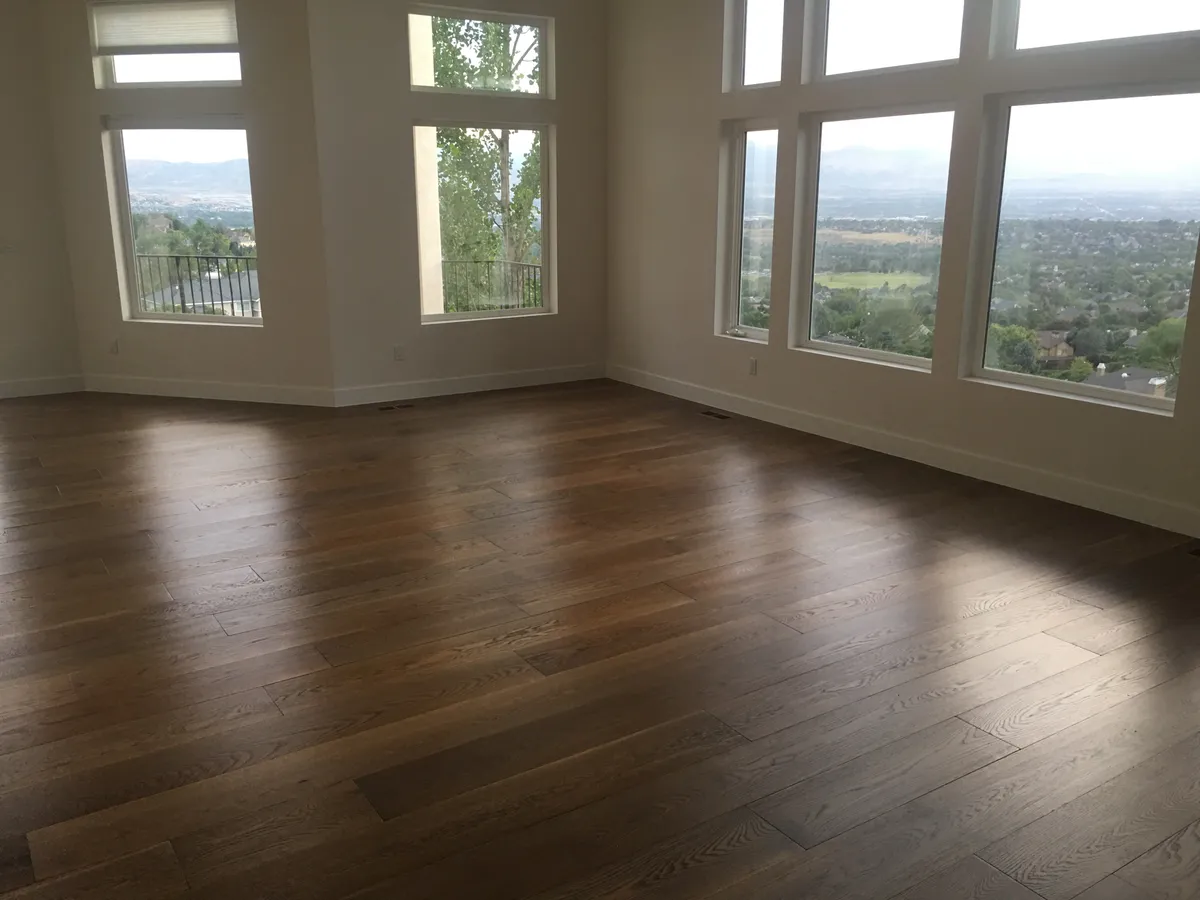
Sandy sits on the east side of the Salt Lake Valley where the homes are a little nicer, the elevation is a little higher, and homeowners are ready to invest in upgrades that match the neighborhood. This isn’t a city looking for the cheapest option; it’s a city looking for the right option.
Sandy at a Glance
Population around 90,700 on the east bench of the Salt Lake Valley. Elevation ranges from about 4,400 feet on the west side to over 5,000 feet on the east bench, drier air than the valley floor, which matters for wood flooring.
The housing stock mixes 1970s ramblers and split-levels on the west side, 1980s–1990s two-stories through the middle, and 1990s–2000s larger homes on the east bench with walkout basements. Nearby Draper and Cottonwood Heights share similar housing profiles. Home values trend higher than the valley average, which motivates homeowners to upgrade interiors to match. Flooring is usually the first place to start.
Best Flooring Options for Sandy
Engineered Hardwood: The Sandy Standard
If there’s a default flooring choice for Sandy homes, engineered hardwood is it. The combination of real wood beauty, climate stability, and home-value alignment makes it the natural fit for most main-level renovations here.
Sandy homeowners tend to favor wider planks (6–7 inches) in white oak, a species the National Wood Flooring Association (NWFA) ranks among the most durable domestic hardwoods, with finishes ranging from natural to light wire-brushed. These wider, lighter-toned planks open up the space and feel contemporary without being trendy. A well-chosen engineered hardwood floor can carry a Sandy home for 20+ years.
Why engineered over solid for Sandy specifically: The east bench sits higher, which means drier air. Solid hardwood at 5,000 feet elevation will see more seasonal movement than the same floor at 4,300 feet in the valley. Engineered hardwood’s cross-layer construction reduces that movement significantly. You get the look of solid with a fraction of the climate risk.
Installed cost: $11–$18 per square foot depending on species, plank width, and wear layer thickness.
Laminate: The Practical Complement
Even when engineered hardwood is the primary choice, laminate handles basements (walkout basements with concrete subfloors are common on the east bench), kitchens, mudrooms, and bathrooms. The winning strategy: engineered hardwood on the main level, laminate in complementary tones for basements and wet areas.
Installed cost: $6.50–$10 per square foot.
Solid Hardwood: For the Purist
Solid hardwood can work on Sandy main levels if you run a whole-house humidifier through winter. On the east bench at higher elevation, this is more commitment than in the valley, but for homeowners willing to maintain it, solid hardwood remains the gold standard.
Installed cost: $11–$18 per square foot.
For a deeper look at how these materials handle Utah’s climate, read our guide to the best flooring for Utah’s dry climate.
Sandy-Specific Considerations
East Bench Elevation and Drier Air
The east bench sits several hundred feet above the valley floor, drier ambient air means indoor humidity in winter drops even lower than the valley average. Engineered hardwood is strongly preferred over solid for this reason. If you choose solid hardwood, a whole-house humidifier isn’t optional and acclimation periods may need to extend beyond the standard 48 hours. Laminate is unaffected: the SPC core doesn’t respond to humidity at all.
Transitioning from Carpet to Hard Surface Whole-Home
The most common Sandy project: full main-level transition from carpet to hard surface. Here’s how it typically phases:
Phase 1: Main level. Living room, dining room, hallways, kitchen. One material (engineered hardwood or premium laminate) through the entire space. Highest impact, highest priority.
Phase 2: Stairs and upper level. Matching the main-level flooring up the stairs and through the upper hallway. Carpet in upstairs bedrooms is perfectly reasonable if you prefer it.
Phase 3: Basement. laminate in a complementary tone, not necessarily identical, but same color family.
Not everyone does all three at once. But planning color and material choices for all phases from the start ensures everything coordinates. We’ll map this out during the consultation.
Matching Upgrades to Home Value
Your floor should match the home’s price point. For homes valued at $500K+, engineered hardwood on the main level is the expected standard, buyers in this range notice quality. At $400K–$500K, premium laminate or a mix of engineered hardwood in primary areas with laminate in secondary spaces both work well.
Flooring typically returns 70–80% at resale in the Sandy market, better than most interior renovations. The key: don’t under-invest in an east bench property, and don’t over-invest in a starter home.
1970s Homes: What’s Under the Carpet
Sandy’s west side has a concentration of 1970s ramblers and split-levels. Expect plywood subfloors in serviceable condition (some squeaks and soft spots are normal), level changes from split-level layouts (quality transition strips handle these cleanly), and occasionally pre-1980 vinyl tiles or adhesive that may contain asbestos. We identify all of this during the consultation.
What Sandy Homeowners Are Choosing
The trends we’re seeing across Sandy in 2026:
Engineered hardwood leads main-level renovations. White oak in natural or light finishes, wide planks (6–7 inch), matte or wire-brushed texture. Warm, modern, timeless.
Whole-home continuity is the norm. Sandy homeowners plan holistically, materials and tones that work from front door to basement, even if the project happens in phases.
laminate in basements is nearly universal. Lighter wood tones are especially popular where natural light is limited.
Dark floors are fading. The espresso-stained look from ten years ago is giving way to lighter, more natural tones that show less dust and brighten rooms.
For detailed pricing across all categories, check our 2026 flooring cost guide.
Ready to See What Works in Your Home?
Sandy homes deserve floors that match the neighborhood. We bring curated samples to your door so you can see materials and colors in your actual space. Your lighting, your walls, your trim. No showroom trip required.